
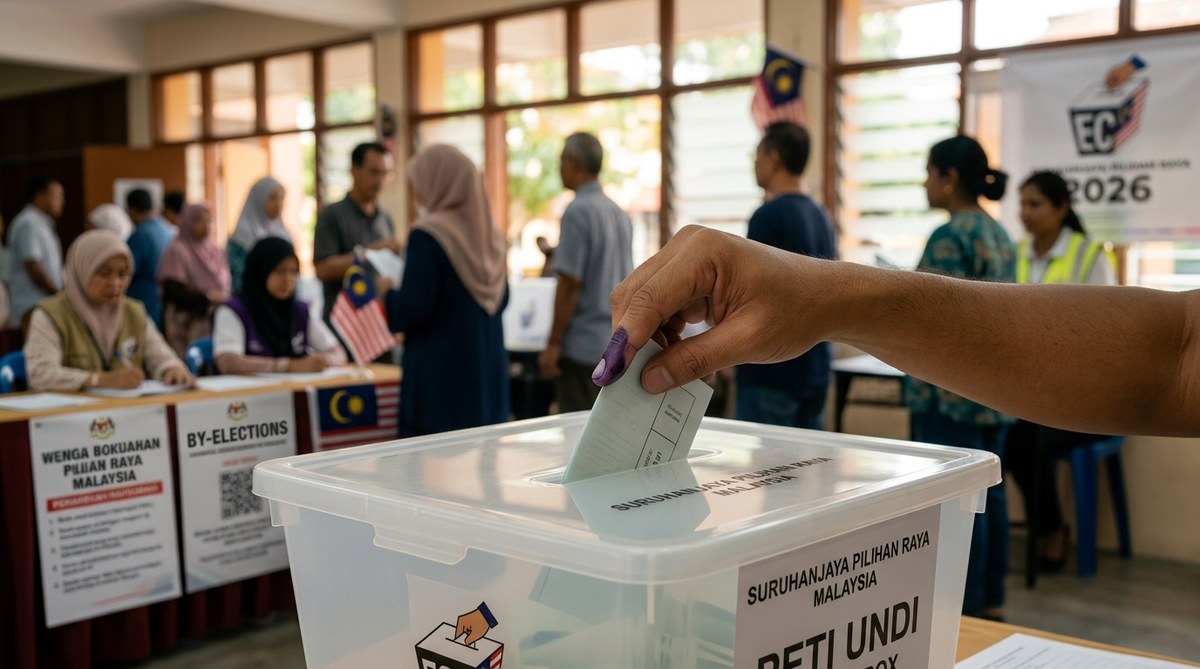
By-elections are the political equivalent of a spot check. They don’t decide who runs the country, but they often tell you exactly how the wind is blowing. In Malaysia, the 2026 by elections have become a crucial litmus test for voter sentiment, offering a real time snapshot of what people are thinking between general elections. With a handful of state and federal seats up for grabs across Peninsular Malaysia and Sabah, these contests are giving political analysts, journalists, and engaged citizens a clearer picture of the public mood ahead of the next big electoral cycle.
Malaysia’s 2026 by elections reveal a deeply divided electorate where economic concerns are overtaking racial and religious narratives. Voter turnout among the youth is rising but still inconsistent, while rural constituencies show a shift toward pragmatic voting. Understanding these micro signals helps political parties fine tune strategies and gives citizens a clearer read on the nation’s democratic health.
By-Elections in 2026: A Window into Voter Mood
Every by election in Malaysia carries its own story. A seat in Johor might reflect state level discontent with infrastructure. A contest in Kelantan could signal how voters view the ruling coalition’s handling of floods and the cost of living. But when you step back and look at the pattern across multiple by elections in 2026, certain themes emerge.
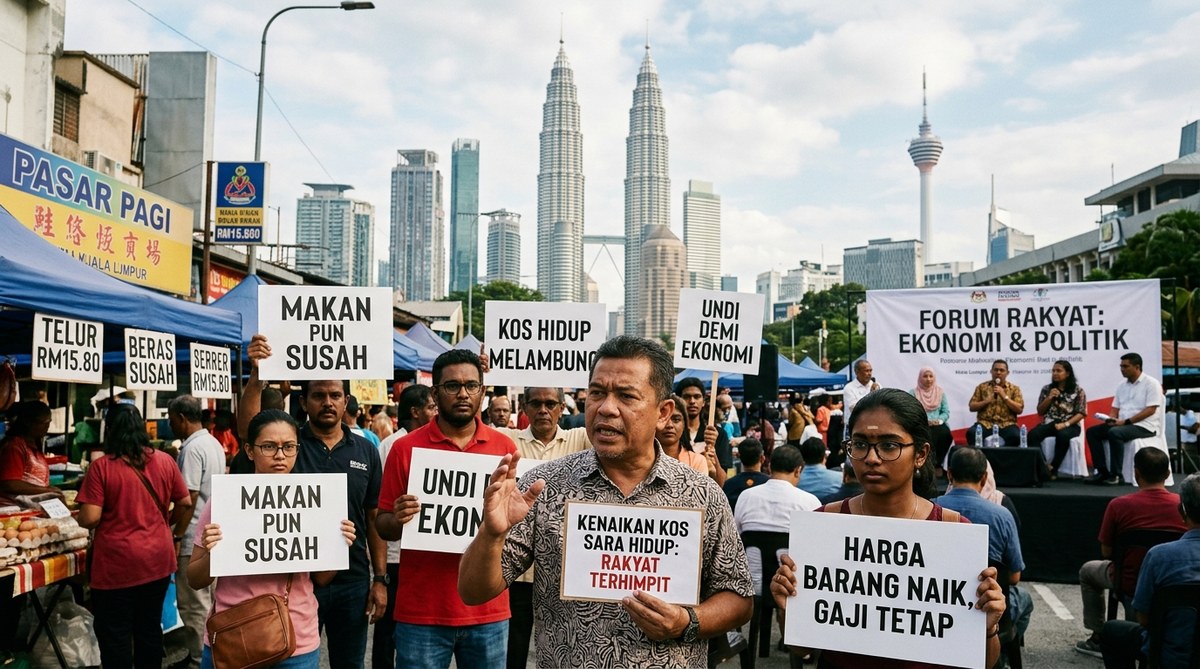
The first is economic anxiety. Across the board, voters are talking about the ringgit, the price of chicken, and the availability of jobs. This is a shift from previous cycles where race and religion dominated the conversation. While those factors still matter, they are no longer the automatic trump card. Voters seem more willing to punish incumbents who cannot deliver on bread and butter issues, regardless of coalition.
The second theme is the fragmentation of the Malay vote. The once solid support for UMNO has continued to fracture, with Perikatan Nasional making inroads in rural areas and new coalitions like Muda attracting younger, urban Malays. This has made by elections in mixed seats particularly unpredictable.
The third is the role of social media. Campaigns in 2026 are fought as much on TikTok and WhatsApp as they are on the ground. Parties that fail to manage their digital presence, especially among younger voters, often see a gap between polling day expectations and results. For a deeper look at how parties are adapting, read about how Malaysia’s political parties are using digital campaigns in 2026.
Key Trends Emerging from the 2026 By-Elections
Let’s break down the major patterns that political analysts are tracking.
-
Youth turnout is rising, but not consistently. In urban seats like Puchong or Subang, young voters (aged 18 to 30) turned out at rates above 70%. In rural seats, turnout dipped below 50%. The gap suggests that while young Malaysians are politically aware, they only show up when the issues feel personal to them.
-
Economic pocketbook issues cut across racial lines. Chinese, Malay, and Indian voters alike rank the cost of living as their top concern. Candidates who propose concrete solutions, like subsidy reforms or job creation programs, gain traction regardless of their party.
-
Religious and racial rhetoric is losing its edge. In several by elections where Perikatan Nasional tried to run on a conservative Malay agenda, they saw lower than expected support in seats with mixed demographics. Voters appear tired of constant identity politics.
-
Independent and third party candidates are gaining ground. In at least three seats, independents captured over 10% of the vote, splitting the opposition and sometimes handing victory to the incumbent. This reflects a desire for alternatives beyond the main blocs.
-
Sabah and Sarawak remain their own political universe. By elections in East Malaysia are dominated by local issues like the Malaysia Agreement 1963 (MA63), infrastructure, and state autonomy. Federal parties struggle to gain footholds without local partners.
To understand how these state level contests affect federal dynamics, check out how Malaysia’s state elections will reshape federal politics in 2026.
What the Numbers Tell Us: A Table of Sentiment Indicators
Comparing by election results from early 2026 to the 2022 general election (GE 15) baseline reveals clear shifts. The table below outlines key indicators and what they suggest about voter mood.
| Indicator | GE 15 Baseline | 2026 By-Election Observation | Sentiment Shift |
|---|---|---|---|
| Voter turnout (national avg) | 74% | 66% (lower in off-cycle polls) | Slight decline, especially in rural seats |
| Youth turnout (18-30) | 58% | 63% (urban), 44% (rural) | Urban youth more engaged; rural youth apathetic |
| Support for Pakatan Harapan | 37% of popular vote | 35% in contested by-elections | Marginal erosion; urban strongholds hold |
| Support for Perikatan Nasional | 30% | 33% in mixed seats | Gains in rural Malay areas, but capped |
| Support for Barisan Nasional | 22% | 19% | Continued decline, even in traditional seats |
| Swing to third party/independent | 5% | 8% | Growing appetite for alternatives |
The data suggests that no single coalition has a clear mandate. Instead, voters are punishing incumbents for perceived failures and rewarding opposition candidates who speak directly to local needs. This volatility makes predicting the next general election extremely difficult.
For more context on how these shifts play into the bigger picture, read our analysis on whether Malaysia is heading toward a two-party system by 2026.
Expert Insights on the Ground
Political analyst Dr. Nina Zulkifli, who has been tracking by elections since 2018, puts it plainly:
“The 2026 by elections have shattered the old assumptions. Voters are no longer loyal to party symbols. They are loyal to solutions. A candidate from any coalition can win if they convince the electorate that they understand local problems. This is a huge shift from even five years ago. The challenge for parties is that this kind of loyalty is very conditional. It can disappear as soon as a promise is broken.”
Dr. Nina’s observation is backed by the data. In the recent by election for the Nenggiri state seat in Kelantan, a relatively unknown independent candidate captured nearly 20% of the vote by focusing on water supply issues, while the major party candidates sparred over religious credentials. The result stunned both coalitions.
Practical Steps for Observers: How to Read the Signals
If you are a journalist, analyst, or simply a politically engaged citizen, you can use the 2026 by elections as a training ground for understanding voter sentiment. Here is a numbered list of practical approaches.
-
Track local issues over national narratives. The candidate who talks most about potholes, school funding, or flood mitigation often wins the seat, not the one who repeats the party manifesto. Record what voters bring up at ceramah (town halls) and compare with campaign slogans.
-
Watch the undecided vote percentage. In 2026, the share of voters who make up their mind in the final week has risen to about 15%. Exit polls and late campaign rallies can indicate a last minute swing.
-
Analyze turnout in early voting and postal votes. These groups are often underreported but can swing a close by election. Look at shifts among civil servants and armed forces personnel.
-
Monitor social media sentiment using simple keyword tracking. Use free tools to track mentions of candidate names, party slogans, and local issues. A sudden spike in negative sentiment about a candidate often correlates with a drop in vote share, provided the candidate does not have a strong ground game.
-
Compare results with the previous general election’s polling stream. If a seat swung by more than 5% from one coalition to another, that signals a structural change in voter preference, not just a one off protest.
For a broader view of the evolving landscape, see our guide to understanding Malaysia’s political landscape post-elections.
Connecting the Dots: What This Means for the Future
The 2026 by elections are not just about the seats themselves. They are about what comes next. If the current trends continue, the 15th general election (GE15) was not a one off. Malaysia is moving toward a multi polar political system where no single coalition can dominate without building broad, issue based alliances.
This puts pressure on all parties. Pakatan Harapan must convince voters it can deliver economic stability. Perikatan Nasional needs to broaden its appeal beyond its Malay base. Barisan Nasional must regenerate its grassroots machinery before it becomes irrelevant. And new players like Muda and PSM must prove they can win seats in a general election, not just by elections.
The sentiment shift also has implications for governance. A government that constantly worries about by election losses may become hesitant to make unpopular but necessary reforms. On the other hand, a government that listens to by election signals can adjust its policies in time to retain public trust.
To understand how the current government is handling these pressures, check out 5 surprising policy shifts under the current Malaysian government.
The Pulse of Malaysian Democracy: What 2026 By-Elections Tell Us
Every by election is a small, fascinating story. But together, they form a narrative about a nation grappling with its identity. Are we still defined by race and religion? Or are we becoming a more issue oriented democracy? The 2026 by elections suggest the answer is messy. Some voters cling to old loyalties. Others are restless for change. Most are simply tired of politics that does not touch their daily lives.
For those of us watching closely, the message is clear: the old playbooks are fading. The next general election will be won by the coalition that best understands this new, unpredictable, and deeply human voter sentiment.
So keep your eyes on the next by election. Talk to voters at the kopitiam. Read the local news. The data is there, and it is telling a story that we can all learn from. For even more context, you can explore the role of youth in shaping Malaysia’s political future and see how this generation is redefining what it means to be a Malaysian voter in 2026.




Leave a Reply