
“`markdown
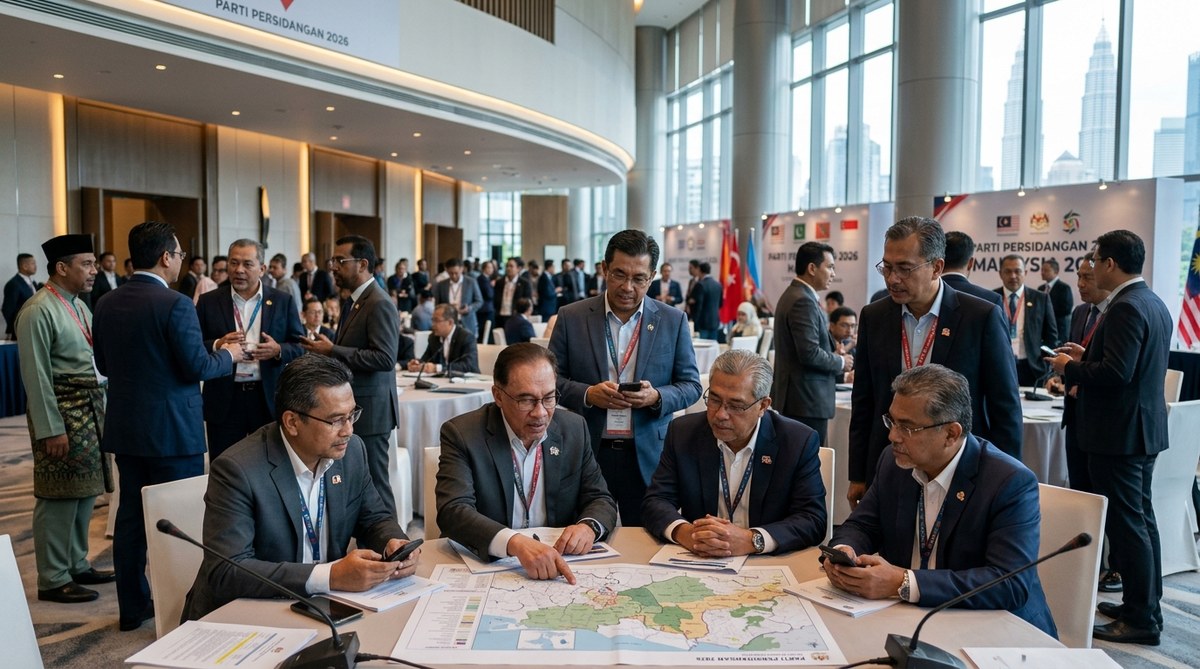
The hall was buzzing long before the first speech. Delegates checked their phones, whispered in corners, and watched each other closely. At the 2026 annual general assembly of a major coalition party, the real drama was not on stage. It was in the handshakes, the absences, and the motions that never reached a vote.
Malaysia coalition politics 2026 is not just about who leads. It is about who stays.
Party conferences this year have become the stage for something bigger. They are testing the bonds that hold the unity government together. Every policy debate, every leadership election, and every closed door meeting sends a signal. And the signals this year are mixed.
Malaysia coalition politics 2026 is defined by a series of high stakes party conferences that are exposing tensions within the unity government. These meetings are not routine. They reveal loyalty shifts, policy disagreements, and leadership contests that could decide the coalition’s future before the next general election.
Why Party Conferences Matter More This Year
Party conferences in Malaysia have always been important. But in 2026, they carry extra weight.
The unity government brings together parties that were once rivals. Pakatan Harapan (PH) and Barisan Nasional (BN) share power at the federal level, but their合作关系 is still young. State elections and by elections have shown that voters remain divided. Inside the coalition, trust is built slowly.
A party conference is where internal decisions become public. Leadership is affirmed or challenged. Policy directions are set. And coalition partners watch closely.
For example, when a component party debates a motion on economic policy, its allies listen for signs of disagreement. When a youth wing elects a new leader, the result can signal a generational shift. Every decision has ripple effects.
This is why analysts and journalists are paying close attention to the conference season in 2026. It offers a rare window into the health of the coalition.
The Key Conferences to Watch
Several party conferences in 2026 stand out. Each one poses different questions for coalition stability.
UMNO: Testing the BN-PH Relationship
UMNO’s general assembly is always a major event. In 2026, it is even more significant.
UMNO leaders must balance two realities. They are part of the federal government alongside PH. But at the grassroots level, many members still view PH as a competitor. Speeches at the assembly will be scrutinised for any hint of friction.
Key things to watch:
– Whether leaders call for greater recognition of UMNO’s role in the coalition
– Any motions that criticise PH policies, especially on Malay rights or Islam
– The tone of the president’s policy address
If UMNO’s conference produces strong criticism of its coalition partners, it could embolden opposition parties. It would also raise questions about the longevity of the unity government.
PKR: Managing Internal Expectations
PKR is the anchor of PH. Its conference in 2026 comes at a time of internal reflection.
The party has faced challenges in recent by elections. Some members feel the coalition government has not done enough to address economic inequality. Others worry that working with BN has diluted PKR’s reformist image.
The conference will test whether the party can stay united. A divided PKR would weaken the entire PH bloc.
PAS and Perikatan Nasional: Opposition Coordination
The opposition is not immune to conference drama either.
PAS continues to grow in strength. But its relationship with Parti Pribumi Bersatu Malaysia (Bersatu) inside Perikatan Nasional (PN) is not always smooth. PAS leaders have hinted at wanting a bigger share of decision making power.
The PN conferences in 2026 will show whether the opposition can maintain discipline. Any public disagreement would be a gift to the unity government.
How Conferences Reveal Coalition Loyalty
Party conferences are not just for show. They reveal loyalty in several practical ways.
- Leadership elections. A contested election shows that factions exist. An uncontested win for a leader can suggest unity, but it can also hide simmering discontent.
- Policy motions. Debates on sensitive topics like subsidies, race based policies, or education reform reveal where parties truly stand. Allies may disagree publicly.
- Attendance patterns. Which coalition leaders attend which conferences? Who sends a representative instead of coming in person? These signals are read carefully.
- Media statements. What leaders say to reporters outside the hall often matters more than what they say on stage.
- Social media activity. Posts from delegates and leaders during the conference can show real time sentiment.
These indicators help analysts assess whether a coalition is strengthening or fraying.
A Table of Conference Signals
Below is a simple guide to reading the signals from party conferences.
| Conference Signal | What It Suggests | Risk Level for Coalition |
|---|---|---|
| Strong attendance by coalition partners | Good working relationship | Low |
| Leadership election with narrow margin | Internal factionalism | Medium |
| Policy motion critical of ally | Potential rift | High |
| Leaders skip each other’s events | Cooling relationship | Medium |
| Public praise between coalition leaders | Active maintenance of ties | Low |
| Youth wing demands more influence | Generational pressure building | Low to Medium |
These signs are not definitive on their own. But taken together, they paint a picture of where the coalition stands.
Expert Voices on the Conference Season
Political observers have noted that 2026 feels different from previous years.
“The conferences this year are not just about party business. They are about survival. Every speech, every motion, and every leadership result is being read as a signal of intent. The coalition partners are in a dance. One wrong step could break the rhythm.”
* Senior political analyst based in Kuala Lumpur
This view is widely shared. The coalition government has held together longer than many expected. But the pressure is building. Party conferences are where that pressure becomes visible.
What This Means for Policy and Governance
When coalition partners are distracted by internal politics, governance can suffer.
Ministers may hesitate to push bold reforms. Policy decisions might be delayed while parties negotiate behind the scenes. The budget process becomes more complicated.
For instance, a party that faces a tough conference might demand concessions from its coalition partners. It could ask for more cabinet posts, changes to policy, or funding for its constituencies. These demands can slow down the government’s agenda.
On the other hand, a successful conference that reaffirms unity can strengthen the coalition. It gives the government a mandate to move forward with confidence.
The next few months will show which direction the coalition is heading.
How Voters and Analysts Can Follow the Action
For those tracking Malaysia coalition politics 2026, here are practical steps to stay informed.
- Watch for live reports from the conference floor. Local media often provides good coverage.
- Follow social media accounts of key delegates. Their posts can reveal sentiment before official statements.
- Look at the resolutions passed at each conference. They indicate party priorities.
- Compare what leaders say at conferences with what they do in parliament. Consistency matters.
- Pay attention to who is not attending. Absences can be more telling than presences.
If you want a deeper understanding of how these dynamics play out, you can read more about how Malaysia’s political landscape will evolve in 2026. It gives useful context for the conference season.
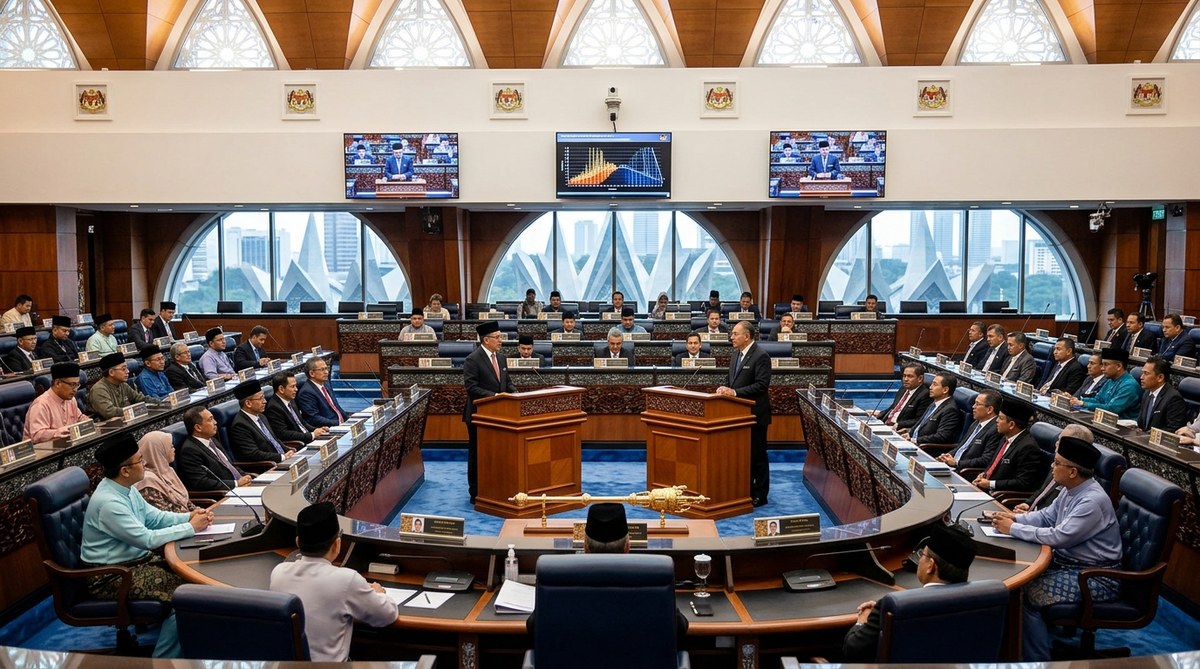
Another helpful resource is the analysis of how Malaysia’s state elections will reshape federal politics in 2026. State level contests often preview what will happen nationally.
The Role of Youth and New Voices
One trend that stands out in 2026 is the growing influence of younger delegates.
Youth wings of several parties are pushing for change. They want more representation in leadership. They care deeply about issues like jobs, education, and digital rights.
At the PH youth conference, for example, there were calls for a more aggressive approach to economic reform. Some young leaders argued that the coalition needed to move faster. Others stressed the importance of stability.
This generational tension is not unique to any one party. It is happening across the political spectrum. How parties manage this internal pressure will affect their electoral prospects.
For more on this, you can check out the role of youth in shaping Malaysia’s political future. It is one of the most important stories of the decade.
Opposition Conferences and Coalition Dynamics
The opposition is not sitting still either.
PAS and Bersatu are holding their own conferences. These events are designed to project unity. But behind the scenes, there are questions about seat allocations for the next general election. Both parties want to contest the same seats in some areas.
If the opposition cannot resolve these issues, the unity government benefits. A divided opposition makes it easier for the coalition to stay in power.
That is why coalition leaders watch opposition conferences just as closely as their own. Every sign of opposition weakness is an opportunity.
You can find more context in the piece about why is Malaysia’s opposition struggling to gain traction in 2026. It explains the challenges the opposition faces.
Looking Ahead: Conference Season and Beyond
The party conferences of 2026 will not decide everything. But they will set the tone for the months ahead.
If the coalition partners emerge from their conferences looking united, the government will gain momentum. If there are open conflicts, the opposition will seize on them.
For now, the smart money is on cautious diplomacy. Leaders on all sides know that the next general election is not far away. They want to enter it in a strong position.
That means managing internal tensions while keeping the coalition intact. It is a difficult balancing act.
Why This Matters for Malaysia’s Future
The stability of the unity government affects every Malaysian. It determines whether policies are implemented. It influences investor confidence. It shapes the political environment for years to come.
That is why the conference season in 2026 is more than a routine political event. It is a test of whether Malaysia’s coalition politics can mature into a stable system.
The answer is not yet clear. But the clues are there, hidden in speeches, motions, and handshakes.
If you want to keep up, pay attention to the conferences. Read between the lines. And remember that in politics, what is not said is often as important as what is.
For a broader view, the article on 3 signs Malaysia’s political coalitions are shifting in 2026 offers a useful checklist. And the analysis of how Malaysia’s opposition is rethinking its strategy in 2026 provides the other side of the story.
Final Thoughts on the 2026 Conference Season
Party conferences are not the only thing that matters in politics. But in 2026, they are a powerful lens.
They show us where loyalties lie. They reveal who is gaining influence and who is losing it. They tell us what the big fights will be about.
For anyone tracking Malaysia coalition politics 2026, the conference season is essential viewing. Watch closely. The future of the unity government may be decided not in parliament, but in a crowded hall, under bright lights, with cameras rolling.
And as always, the best insights come from paying attention to the details. Who sat next to whom. Who spoke longest. Who was silent.
That is where the story really lives.



Leave a Reply