
“`markdown
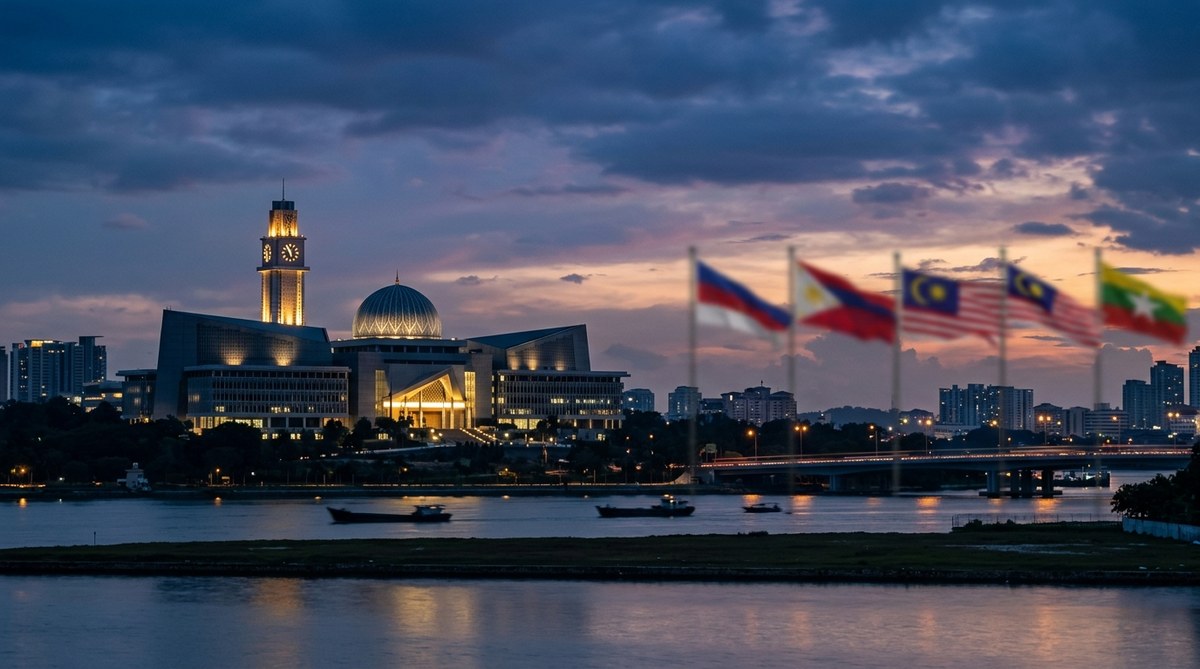
A year ago, few predicted that Malaysia would become a quiet lightning rod for regional geopolitical tension. Yet here we are in 2026. The South China Sea remains a persistent flashpoint. Trade decoupling between major powers continues to reshape supply chains. And Malaysia, sitting at the heart of ASEAN, finds itself in a delicate balancing act. The question on the minds of policy analysts, investors and academics is straightforward: can Malaysia’s domestic political stability hold as external pressures mount?
Malaysia’s political stability in 2026 faces genuine tests from regional geopolitical tensions, but the country’s institutional resilience, neutral foreign policy tradition and strong economic fundamentals provide a buffer. The biggest risk is not external pressure alone, but how domestic political actors respond to it. For investors and analysts, monitoring coalition dynamics and civil service neutrality matters as much as watching the South China Sea.
The Geopolitical Pressure Cooker in Southeast Asia
Malaysia does not exist in a vacuum. The neighbourhood has grown louder. Competing claims in the South China Sea have intensified, with incidents near Terumbu Beting Raja Jarum/Peninjau (what some call Louisa Reef) and Gugusan Semarang Peninjau (the James Shoal area) drawing regular attention. Meanwhile, the US China technology rivalry has forced every ASEAN member to choose sides on chip supply chains, 5G infrastructure and data localisation rules.
For Malaysia, this creates a tricky puzzle. The country has long prided itself on a foreign policy of neutrality and engagement with all sides. But in 2026, that position is harder to maintain. Pressure from Washington to reduce reliance on Chinese components clashes with Beijing’s growing role as Malaysia’s largest trading partner for 16 consecutive years.
Domestic Politics: More Stable Than It Looks
Let us talk about the domestic scene. After the political turbulence of 2020 to 2022, when Malaysia cycled through three prime ministers, the current administration has brought a degree of calm. The unity government framework, while unwieldy at times, has held. The 2023 state elections did not topple the arrangement, and the 2025 parliamentary sessions passed without a major defection crisis.
Does that mean Malaysia’s political stability is guaranteed? Not exactly.
What keeps analysts up at night is not the current government’s survival, but what happens when external shocks test the coalition’s internal cohesion. When a superpower demands a public stance on chip export controls, for example, partners within the unity government may disagree. One faction leans toward China. Another prefers the US. If those disagreements become public, the coalition could crack.
Here are the three main domestic vulnerabilities that geopolitical tensions could exploit:
-
Coalition friction on foreign policy direction. Different parties within the government have different traditional allies. Managing these differences behind closed doors is becoming harder as external demands grow louder.
-
Civil service neutrality under strain. Malaysia’s administrative machinery has historically provided continuity. But senior officials now face competing pressures from diplomatic partners, creating potential for divided loyalties.
-
Public sentiment and information wars. Foreign disinformation campaigns targeting Malaysia are real. They amplify racial and religious fault lines, especially during election periods. The 2026 state elections could become a playground for external influence operations.
Why Investors Should Watch the Ringgit and Policy Signals
The ringgit has had a bumpy ride in 2026. It is not just about US interest rates anymore. Currency traders now price in a “geopolitical risk premium” for Southeast Asian nations perceived as caught in the crossfire.
When tensions spike in the South China Sea, the ringgit typically weakens against the US dollar for three to five days before stabilising. That pattern has repeated four times in the first half of 2026 alone. For investors holding Malaysian assets, the volatility is manageable but unnerving.
What matters more is policy consistency. The Malaysian government has signalled that it will continue its “hedged engagement” strategy: deepening trade ties with China while expanding partnerships with the US, Japan and the European Union. This approach has attracted steady foreign direct investment, particularly in the semiconductor and renewable energy sectors.
But hedging only works if international partners trust that Malaysia’s political stability will outlast any single administration. That trust is currently intact, but it is fragile.
A Framework for Monitoring Risks
For academics and policy analysts tracking Malaysia political stability and geopolitical tensions, having a structured monitoring approach helps. Below is a practical framework.
| Risk Category | What to Watch | Signs of Escalation | Mitigation Factors |
|---|---|---|---|
| South China Sea incidents | Frequency of patrols near Malaysian waters | Military standoffs or diplomatic protests | ASEAN multilateral forums, existing bilateral mechanisms |
| US China trade decoupling | New export control lists affecting Malaysian factories | Sudden factory relocations or mass layoffs | Diversified trade partners, semiconductor investment pipeline |
| Domestic coalition stability | Public statements by coalition partners on foreign policy | Open disagreements on China or US relations | Strong personal relationships among top leaders |
| Information warfare | Social media trends during election periods | Coordinated campaigns exploiting racial or religious issues | Media literacy programmes, regulatory enforcement |
| Currency and capital flows | Ringgit volatility index | Sustained capital flight beyond 5 consecutive days | BNM reserves, diversified export base |
What Experts Are Saying
I spoke with a senior fellow at a Kuala Lumpur based think tank who has advised three administrations on foreign policy. Here is what they shared:
“Malaysia’s political stability is not at immediate risk from geopolitical tensions. But it is at medium term risk if those tensions persist without a diplomatic circuit breaker. The government needs to invest in domestic narrative control as much as in foreign policy. If the public starts believing that Malaysia is being forced to choose a side, that is when the political ground shifts. For now, the institutions are holding. But institutions need constant care.”
That last point about institutions is worth sitting with. Malaysia’s civil service, judiciary and election commission have shown resilience. They are not perfect, but they provide a floor beneath any political crisis. The 2020 Sheraton Move tested those institutions and they adapted. The current system is stronger for it.
Three External Pressure Points to Track in Late 2026
If you are monitoring Malaysia political stability and geopolitical tensions, here are the specific events on the horizon:
- The ASEAN Summit in October 2026, where Malaysia will need to coordinate a unified response to the South China Sea situation.
- The US presidential election cycle, which always creates uncertainty for Southeast Asian allies.
- China’s economic stimulus packages, which could either boost Malaysian exports or create dependency concerns.
Each of these events could trigger domestic political reactions. Watch how coalition partners frame them publicly.
How Malaysia’s Political Stability Compares Regionally
It helps to put things in perspective. Compared to Thailand, where military influence remains heavy, or Myanmar, where civil conflict continues, Malaysia looks stable. Compared to Singapore, it looks messier but more pluralistic. The key difference is that Malaysia’s political system allows for disagreement without collapse. There is a functioning opposition, a free press (with some caveats) and an active civil society.
These features act as shock absorbers. When geopolitical tensions rise, the system can process dissent without breaking. That is not a small thing.
For a broader view of how the country got here, you can read our explainer on understanding Malaysia’s political landscape post elections. It covers the coalition dynamics that still shape today’s stability calculus.
The Youth Factor and Economic Diversification
There is another angle that does not get enough attention. Young Malaysians aged 18 to 30 are less attached to the old Cold War frameworks. They do not see China as an ideological threat. They do not see the US as a saviour. They care about jobs, cost of living and digital freedom. This generation is less likely to be mobilised along geopolitical lines, which reduces the risk of domestic polarisation over foreign policy.
That said, economic anxiety can change that. If factory closures happen due to trade tensions, young voters will blame someone. That someone could be the government. That is why economic diversification matters so much.
Malaysia’s push into renewable energy, advanced manufacturing and digital services is not just an economic strategy. It is a political stability strategy. A diversified economy is harder to destabilise through external pressure.
You can read more about this in our piece on how Malaysia’s civil service reform is redefining governance in 2026. The quality of administration matters a great deal when external shocks hit.
What Keeps Me Confident About Malaysia’s Trajectory
Here is the honest take. Malaysia’s political stability is under more pressure in 2026 than it was in 2022, but it is also better prepared. The government has more experience managing coalition tensions. The central bank has deeper reserves. The foreign policy team has stronger relationships across the board.
The real risk is not a dramatic collapse. It is a slow erosion of trust if geopolitical tensions drag on for years without resolution. That slow erosion is harder to see and harder to fix.
But for now, Malaysia is holding the line. The institutions are working. The people are engaged. And the country’s natural position as a bridge between powers remains an asset, not a liability.
Staying Grounded Amid the Noise
For those tracking these issues professionally, the recommendation is simple. Watch the domestic indicators as closely as the international ones. A coalition partner’s tone during a parliamentary debate on the South China Sea tells you more than a think tank report ever will. A civil servant’s quiet resignation matters more than a diplomatic statement.
Malaysia political stability and geopolitical tensions will remain linked for the foreseeable future. But the connection is not deterministic. Malaysia has agency. It has choices. And so far, it is making reasonably good ones.
If you want to go deeper on how the current government is managing these pressures, take a look at our analysis of 5 surprising policy shifts under the current Malaysian government. Some of them might change how you view the country’s strategic direction.
The story of Malaysia in 2026 is not one of a nation at risk. It is one of a nation navigating complexity with a steady hand. That is worth paying attention to.





Leave a Reply