
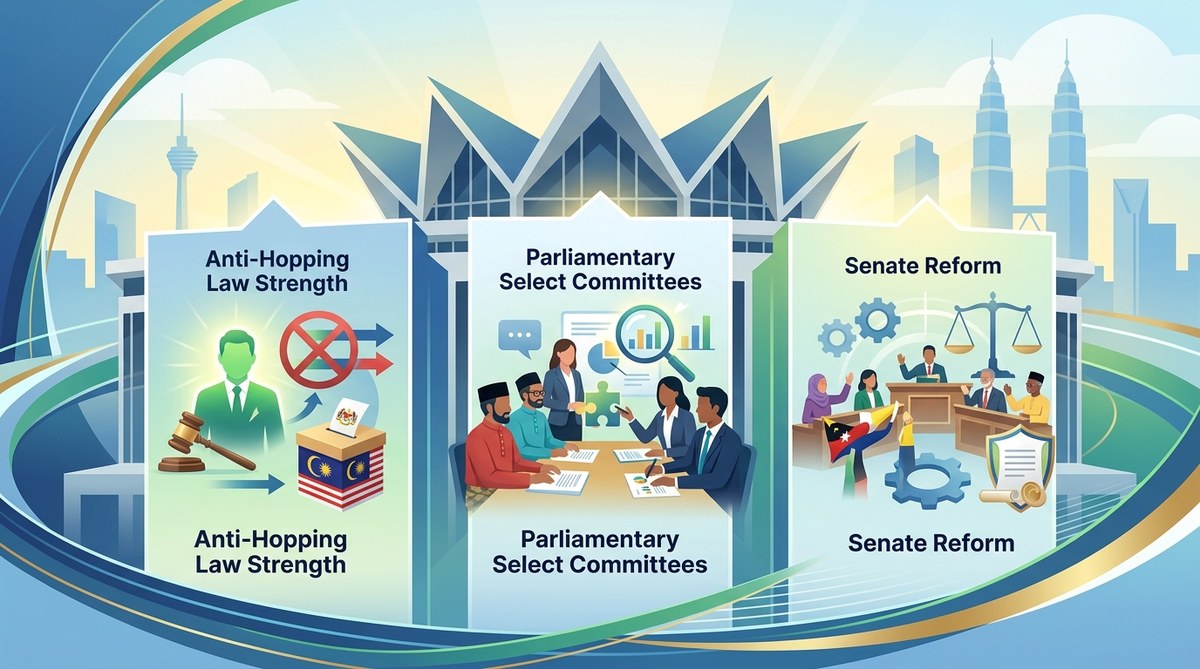
Parliament in Malaysia is never boring, and 2026 is turning into a defining year for how the country is governed. After years of political instability, coalition shifts, and public demands for accountability, lawmakers are now pushing forward three major reforms. These changes could reshape the balance of power, make politicians more responsible to voters, and strengthen our democratic institutions. If you care about where Malaysia is headed, these are the proposals you need to understand right now.
Three parliamentary reforms under debate in 2026 aim to limit the prime minister to two terms, tighten anti-hopping laws to stop party switching, and revive the Parliamentary Services Act for more independent oversight. If passed, these changes could increase political stability, rebuild trust in elections, and give Parliament more power to check the executive. Malaysians should watch these closely.
The Push for Prime Minister Term Limits
One of the most talked about proposals in 2026 is a constitutional amendment to cap the prime minister’s tenure at two terms. The idea is not new. Anwar Ibrahim himself promised this reform when he became PM, and a bill was tabled in late 2025. But it failed to get the required two-thirds majority. Now, after months of negotiation, the government is trying again with a revised version.
Why Term Limits Matter for Malaysia
Malaysia has seen three prime ministers in four years before Anwar took office. That kind of turnover hurts policy continuity and investor confidence. A term limit would prevent any single leader from staying in power too long, reducing the risk of executive arrogance and corruption.
Supporters argue it would also encourage healthy competition within parties. Without term limits, a PM can cling to power even when the party wants change. With a limit, leadership transitions become predictable and orderly.
Steps to Pass a Term Limit Amendment
- The government must secure a two-thirds majority in the Dewan Rakyat. Currently, the unity government holds about 148 of 222 seats, so they need about 148 votes.
- The bill is then debated in a special parliamentary committee to fine tune the wording. Key issues include whether the limit applies retroactively and what counts as a “term”.
- After committee approval, the bill goes to a final vote. If passed, it still needs approval from the Dewan Negara and then royal assent from the Yang di-Pertuan Agong.
The main sticking point remains. Some opposition MPs want the limit set at one term, while government backbenchers insist on two. A compromise may see the limit set at two terms but with a grace period for sitting PMs.
What Critics Say
Some analysts warn that term limits could weaken political parties. “If a prime minister knows they can only serve two terms, they may start looking for their next job early instead of focusing on governing,” said a political scientist from Universiti Malaya. Others argue that term limits are unnecessary in a parliamentary system because voters can already remove a government at the next election.
But supporters counter that Malaysia’s electoral system does not always reflect the people’s will, especially with gerrymandering and money politics. A term limit adds a safety net.
Internal link opportunity: For a broader look at how power shifts affect parties, read Understanding Malaysia’s Political Landscape Post-Elections.
Strengthening the Anti-Hopping Law
The Anti-Hopping Law passed in 2022 was a direct response to the Sheraton Move. It made MPs lose their seats if they switched parties. But it had loopholes. For example, if a whole party leaves a coalition, the law does not apply. And if an MP is expelled, they do not lose their seat. In 2026, a new bill aims to close these gaps.
Three Key Changes in the 2026 Proposal
- Party expulsion triggers a by-election: If a party kicks an MP out, that MP must vacate the seat. This prevents party leaders from using expulsion as a tool to silence internal dissent.
- Coalition hopping is covered: If a party leaves a ruling coalition, its MPs lose their seats unless they join a new coalition approved by voters. This stops the “party hop by proxy” tactic.
- Independent MPs cannot join parties midterm: If someone wins as an independent, they stay independent until the next election. This stops the practice of buying independent support after elections.
Table: Comparing the 2022 and 2026 Anti-Hopping Laws
| Scenario | 2022 Law | 2026 Proposal |
|---|---|---|
| MP switches party | Seat vacated | Seat vacated |
| Party expels MP | MP keeps seat | Seat vacated |
| Party leaves coalition | No action | By-election unless new coalition approved |
| Independent joins party midterm | Not addressed | By-election triggered |
The 2026 bill is designed to make party hopping nearly impossible. But it also faces pushback from smaller parties who fear it will entrench two big coalitions and kill political flexibility.
A Real World Example
Imagine a scenario where an MP from Parti A inside the unity government decides to leave Parti A but wants to stay loyal to the coalition. Under the current law, they could switch to Parti B within the same coalition. Under the 2026 bill, they would have to resign and contest a by-election. This gives voters the final say, which is exactly what reformists want.
“The anti-hopping law cannot be a half measure. Either we shut every door or we accept that floor crossing will continue,” said a former EC chairman in a recent forum.
Internal link opportunity: To see how party loyalty affects voting patterns, check How Malaysia’s Political Parties Are Using Digital Campaigns in 2026.
Reviving the Parliamentary Services Act
This reform is less flashy than term limits or anti-hopping, but it is arguably the most structural. The Parliamentary Services Act (PSA) was abolished in 1992, putting Parliament’s budget and staff under the Prime Minister’s Department. That means Parliament cannot truly check the executive because its resources are controlled by the very government it is supposed to oversee.
In 2026, a new PSA bill is being finalized to restore Parliament’s autonomy.
What the New PSA Would Do
- Create an independent Parliamentary Service Commission to manage staff and budget.
- Give the Speaker control over parliamentary committees, not the government.
- Allow Parliament to set its own rules without needing executive approval for administrative decisions.
- Provide secure funding for the office of the Opposition Leader and for research services.
Benefits for Malaysians
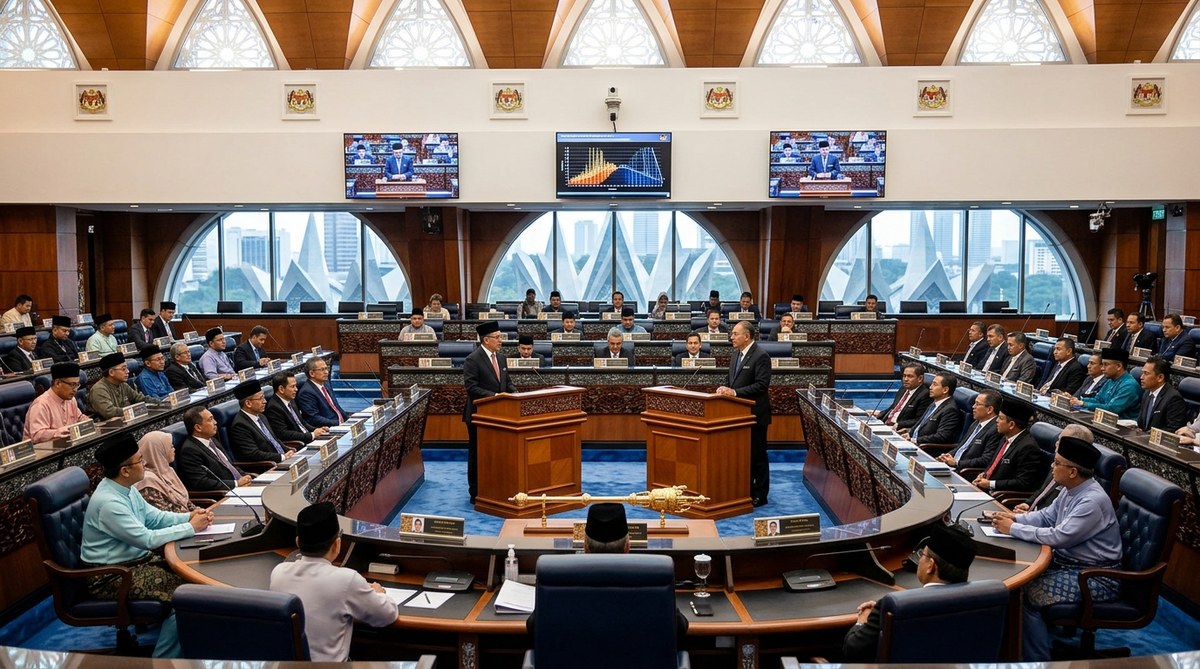
When Parliament is independent, it can hold the government to account more effectively. For example, the Public Accounts Committee could investigate any ministry without fear of budget cuts. Select committees could call witnesses and demand documents without needing a minister’s permission.
Malaysia’s current ranking on parliamentary openness is mediocre compared with regional peers. Indonesia and Thailand already have more autonomous parliaments. The PSA reform would bring Malaysia up to standard.
Political Hurdles
The bill needs only a simple majority, which the unity government has. But there is resistance from within the executive. Some ministers do not want a powerful Parliament that could interfere with their plans. The reform also requires amending the Federal Constitution to remove Parliament from the executive’s purview. That needs a two-thirds majority.
Internal link opportunity: For more on how governance changes affect the civil service, read How Malaysia’s Civil Service Reform Is Redefining Governance in 2026.
A Quick Overview of PSA Benefits
- More transparent budget scrutiny.
- Better lawmaking through expert committee input.
- Stronger oversight of government spending.
- Fairer allocation of time for opposition MPs.
What These Reforms Mean for Malaysia’s Future
If all three reforms pass, Malaysia could enter a new era of political stability and accountability. Term limits prevent a single leader from dominating. The anti-hopping law locks in party loyalty, reducing the temptation for opportunistic switches. And the PSA gives Parliament real teeth.
Of course, no reform is perfect. There will be unintended consequences. Term limits might weaken parties. Anti-hopping laws could reduce voter choice. An independent Parliament might become slow and bureaucratic. But the current system is clearly not working well. The Sheraton Move, the pandemic political crisis, and the constant talk of “back to basics” governance have eroded public trust.
These reforms are a step toward rebuilding that trust. They give voters more certainty. When you cast your ballot in the next general election, you will have a clearer picture of what to expect. Your MP cannot hop without facing you again. The PM cannot cling to power forever. Parliament cannot be bullied by the executive.
Three Steps You Can Take as a Citizen
- Follow the parliamentary calendar. The PSA bill is scheduled for the June 2026 sitting. Anti-hopping amendments are in September. Term limits may come in the November sitting.
- Write to your MP. Ask them where they stand on each reform. Use social media to tag them and start a public conversation.
- Join civil society groups like BERSIH or Engage that are monitoring these reforms. Their reports help you see if politicians are keeping promises.
Malaysia is at a crossroads. 2026 could be the year we fix some of the structural flaws that have haunted our democracy for decades. Or it could be another year of half measures. The choice is not just in the hands of MPs. It is also in the hands of every Malaysian who pays attention, speaks up, and holds leaders accountable. Let us make sure that by the end of 2026, we can look back and say that our Parliament finally started working for us.
Internal link opportunity: For a deeper analysis of coalition dynamics, see Is Malaysia Heading Toward a Two-Party System by 2026?.






Leave a Reply