
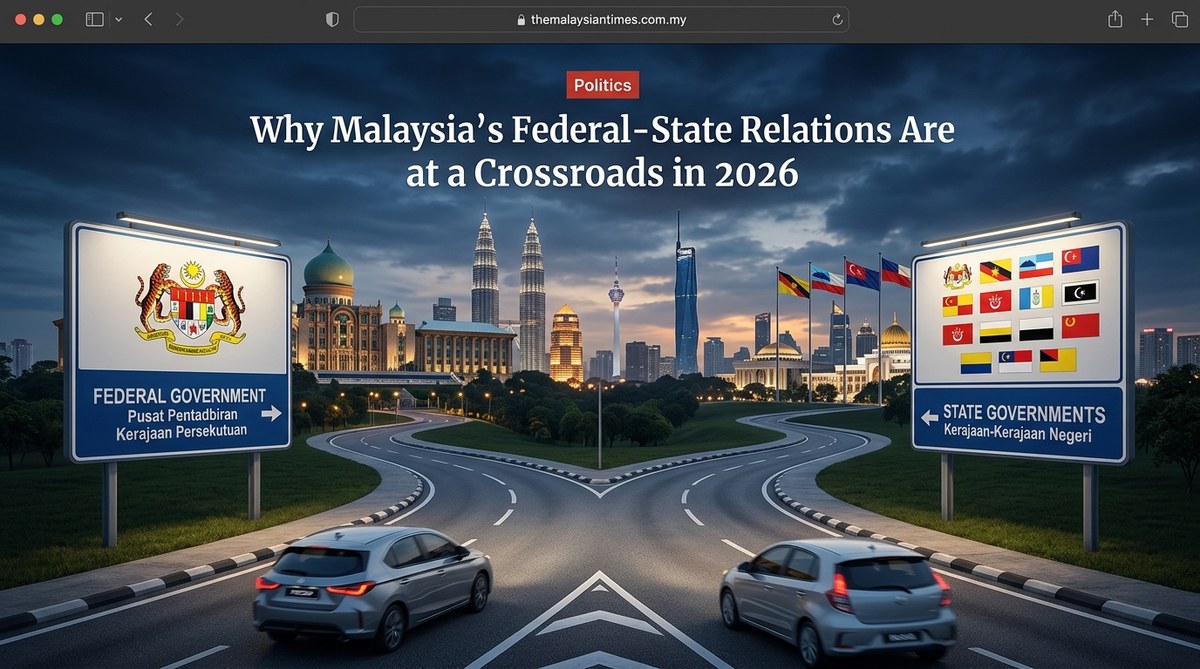
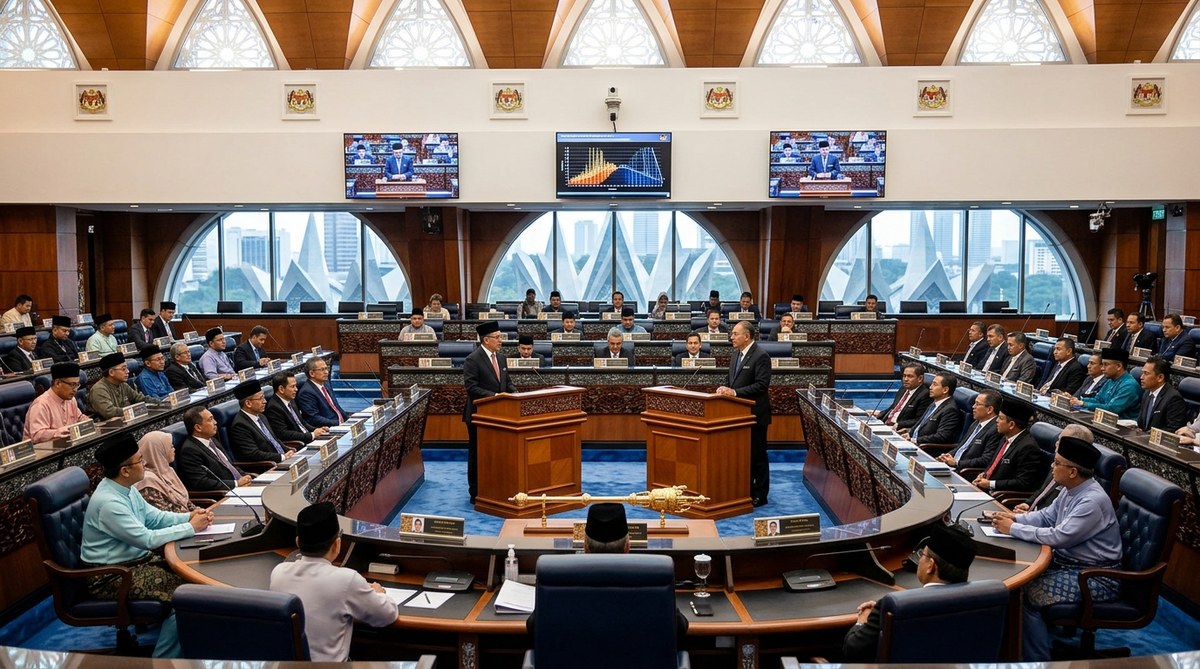
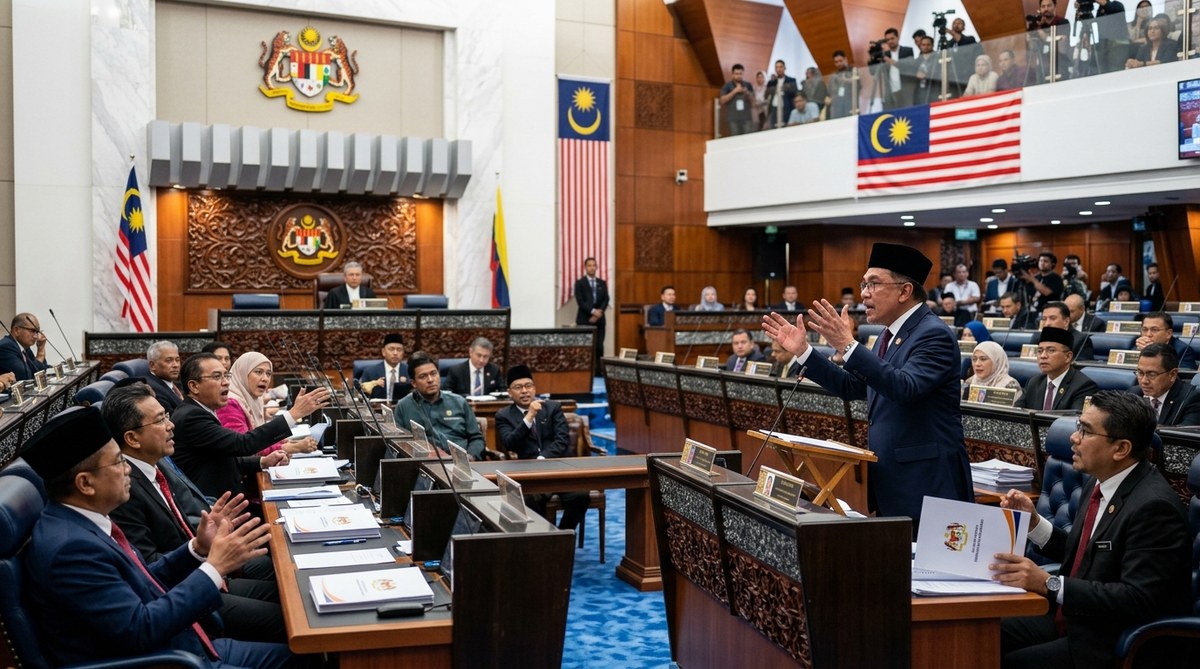
The air in the Dewan Rakyat has felt heavier this session. Every debate about Budget 2026 seems to circle back to one unresolved question: how much power should Putrajaya hold over the states? From Sabah’s persistent demands for a larger share of oil royalties to Penang’s frustration over delayed infrastructure approvals, the cracks in Malaysia’s federal structure are becoming harder to ignore. For the first time in years, multiple state governments are openly challenging the status quo. This is not a minor political squabble. It is a structural reckoning. The question is whether Malaysia can renegotiate its federal bargain before the system buckles under its own weight.
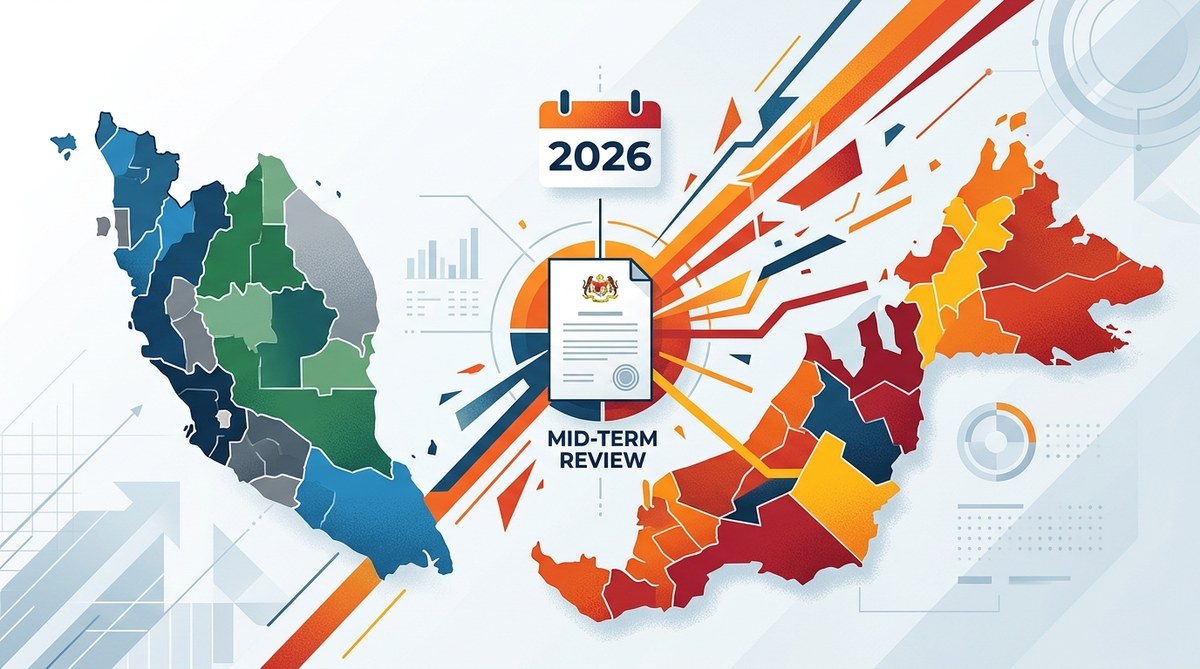
Malaysia’s federal-state relations in 2026 are defined by four major flashpoints: fiscal inequality, political divergence, legal ambiguity, and administrative centralisation. Without meaningful reform of revenue sharing, the Malaysia Agreement 1963, and the role of the National Land Council, the federation risks deepening regional resentment and stalling national development. Change must come from both Putrajaya and the states.
The fiscal fault line that divides the federation
Money is at the heart of every strained relationship between Putrajaya and the state governments. In 2026, the gap between what states contribute and what they receive remains the most visible source of tension.
Sabah and Sarawak have long argued that the federal government collects far more from their natural resources than it returns. The 2026 federal budget allocated RM6.7 billion in special grants to both states, but local leaders insist this is a fraction of what they are owed under the Malaysia Agreement 1963 (MA63). The issue is not just about fairness. It is about survival. Sabah’s infrastructure deficit, for example, is stark. Roads in the interior are still unpaved. Rural clinics lack basic medicines. Meanwhile, oil and gas revenues flow steadily to Petronas, which answers to Putrajaya.
Penang and Selangor face a different fiscal problem. They are net contributors to the national budget. They generate huge tax revenues from manufacturing, services, and property. Yet they receive less in federal development funds per capita than less developed states. This creates a perverse incentive where wealthy states are punished for their success. The result is growing resentment among state governments that feel they are subsidising the rest of the country without receiving proportionate support.
The table below shows the disparity in federal development allocations for selected states in 2026.
| State | Estimated federal contribution per capita (RM) | Development allocation per capita (RM) | Gap (RM) |
|---|---|---|---|
| Selangor | 8,200 | 1,150 | +7,050 |
| Penang | 7,800 | 1,300 | +6,500 |
| Sabah | 2,400 | 3,200 | -800 |
| Kelantan | 1,900 | 3,600 | -1,700 |
The pattern is clear. Wealthy states subsidise poorer ones. That is not inherently wrong. But the lack of transparency in how the federal government calculates these allocations fuels distrust. State leaders want a formula based on objective criteria like population, poverty rates, and infrastructure needs. Instead, they often see allocations driven by political loyalty.
Three practical steps toward fairer revenue sharing
If Malaysia wants to ease federal-state tensions, the process must start with fiscal reform. Here is a realistic sequence of actions that could build trust.
-
Establish an independent fiscal commission. Currently, the Finance Ministry decides how much each state receives. That creates a conflict of interest. An independent body, modelled on Australia’s Commonwealth Grants Commission, could recommend allocations based on need and equity. The federal government would still make the final decision, but the process would be transparent.
-
Codify the MA63 commitments into law. Many promises made under MA63 remain unfulfilled. Sabah and Sarawak want their constitutional rights restored, including control over land, forestry, and local government. A parliamentary select committee on MA63 implementation, with real enforcement powers, could track progress and report publicly.
-
Implement a fixed percentage revenue sharing mechanism. Instead of ad hoc grants, the federal government could commit to sharing a fixed percentage of national income tax or oil and gas revenue with the states. This would give states predictable income and reduce annual bargaining.
These steps are not radical. They are standard practice in many federal systems around the world. Malaysia simply needs the political will to adopt them.
The legal battleground: land, water, and local government
Beyond money, the second major flashpoint in 2026 is legal jurisdiction. The Federal Constitution divides powers into three lists: federal, state, and concurrent. In practice, the federal government has gradually encroached on state matters.
Land is a prime example. The National Land Council, chaired by the Prime Minister, can issue policies that state governments must follow. In 2025 and 2026, several states challenged federal directives on land conversion for housing projects. Penang’s state government, for instance, wanted to fast track land reclamation for the Penang South Reclamation project to fund infrastructure. The federal government delayed approvals, citing environmental concerns. Local leaders saw it as political interference.
Water management is another area of conflict. Selangor and the federal government have clashed over the restructuring of the water industry for years. In 2026, the dispute continues over pricing and ownership of water treatment plants. The state wants to retain control. Putrajaya wants centralisation. Neither side is willing to compromise.
Local government is perhaps the most sensitive issue. The constitution does not mention local government as a state matter, but historically, states have managed municipal councils. In recent years, the federal government has pushed for standardisation of local government laws, including planning approvals and licensing. State leaders see this as a power grab.
“The federal government cannot keep treating states as administrative units. We are partners in a federation. If Putrajaya wants cooperation, it must respect the boundaries set by the constitution.” — Tricia Yeoh, political analyst and author of Federal-State Relations in Malaysia
Political divergence and the rise of regional parties
Fiscal and legal tensions are compounded by a shifting political landscape. In 2026, the ruling coalition at the federal level does not control every state government. Sabah, Kelantan, Terengganu, and Kedah are governed by opposition parties or coalitions. Penang and Selangor are held by Pakatan Harapan, which is part of the federal government but still finds itself at odds with Putrajaya on specific issues.
This creates a dynamic where federal-state relations are not just about policy. They are also about political survival. Federal ministers are less inclined to approve projects in states led by rivals. State leaders, in turn, use federal neglect as a campaign tool. The cycle deepens distrust.
The rise of regional parties, particularly in Sabah and Sarawak, adds another layer. Parties like Gabungan Parti Sarawak (GPS) and Gabungan Rakyat Sabah (GRS) have made state rights a central plank of their platform. They are no longer willing to be junior partners in a federal government. They demand equal footing. This shift is reshaping national politics and forcing federal leaders to take state grievances more seriously.
For a closer look at how these regional dynamics are influencing national coalitions, read our analysis of how Malaysia’s state elections will reshape federal politics in 2026.
What needs to change: a roadmap for reform
The path forward requires action on multiple fronts. Below is a summary of the key reforms that could transform federal-state relations.
- Fiscal reform: Create an independent grants commission. Implement a fixed revenue sharing formula. Publish clear allocation criteria.
- Constitutional clarity: Fulfil MA63 commitments. Amend the National Land Council Act to limit federal overreach. Restore state control over local government.
- Political de-escalation: Separate development allocations from political loyalty. Establish a formal federal-state council with regular meetings and binding dispute resolution.
- Administrative decentralisation: Devolve more decision making power to state governments in areas like education, health, and public transport. Allow states to experiment with policies that suit local conditions.
These changes will not happen overnight. They require political courage and a willingness to share power. But the alternative is a federation that becomes increasingly dysfunctional, where every budget negotiation turns into a constitutional crisis.
The road ahead for Malaysia’s federal bargain
Malaysia was designed as a federation. That design was meant to accommodate diversity, not suppress it. The founding fathers understood that a country as varied as Malaysia, with different states, different histories, and different economic realities, needed a flexible system of governance. Somewhere along the way, that flexibility was replaced by centralisation.
In 2026, the federation is being tested like never before. The states are louder. The demands are clearer. And the federal government is running out of excuses. The choice is simple: either negotiate a new deal that respects state autonomy and fiscal fairness, or watch the federation fracture further.
For those who want to understand the broader political shifts driving these tensions, our piece on how Malaysia’s political landscape will evolve in 2026 offers a useful companion read.
The future of Malaysia’s federal-state relations depends on leaders who are willing to listen, to compromise, and to share power. That is a tall order in any political environment. But it is the only path that leads to a stronger, more united Malaysia. Let us hope the decision makers in Putrajaya and the state capitals are paying attention.







Leave a Reply