
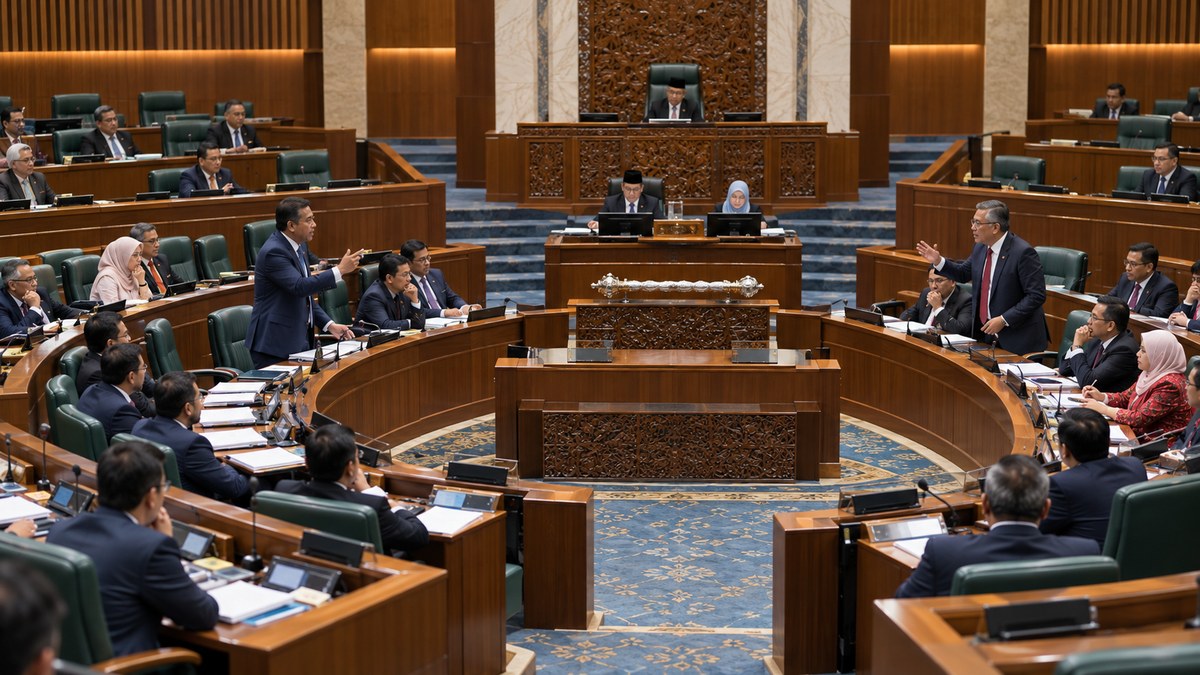
The air in Parliament was tense last month. During a debate on the National Energy Transition Roadmap, a backbencher from a ruling coalition stood up and criticised the government’s solar subsidy programme for benefiting only large corporations. Minutes later, an opposition MP from a traditionally pro-business party defended the same programme. The moment captured something bigger than a single policy argument. It showed how Malaysia’s green technology shift is redrawing political lines in ways no one predicted a few years ago.
Malaysia’s green technology policies are creating a new political fault line that cuts across traditional party coalitions. Voters in urban seats increasingly prioritise climate action, while rural constituencies fear job losses in carbon-intensive industries. This divide is forcing parties to pick sides, splintering old alliances and forming unexpected partnerships ahead of the 2026 general election.
The old political map no longer applies
For decades, Malaysian politics followed predictable lines. Race, religion, and rural versus urban identities shaped voting blocs. Parties knew their base. A voter in a Felda settlement would back Barisan Nasional. A middle-class voter in Petaling Jaya would lean Pakatan Harapan. Those patterns are still present, but they are weakening.
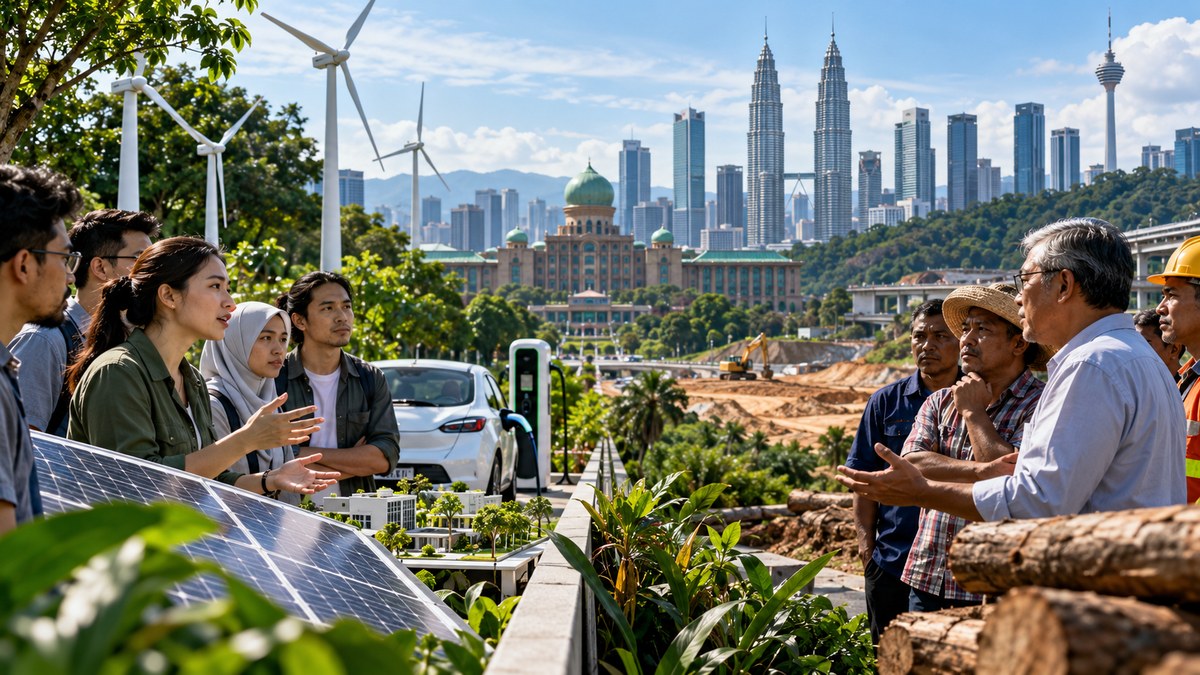
Green technology policies have introduced a new variable. The government’s push for renewable energy, carbon taxes, and electric vehicle infrastructure does not affect all communities equally. A solar farm in Kedah creates different economic winners and losers than a coal plant closure in Perak. Politicians are discovering that their stance on these issues can attract voters from across the old divides, while repelling their traditional supporters.
Take the case of the East Coast. States like Terengganu and Kelantan have long been strongholds for Perikatan Nasional. Yet these states also have significant potential for solar and wind energy. Local leaders see an opportunity to attract investment. This creates tension with the party’s central leadership, which has been sceptical of federal green initiatives. The result is internal friction that did not exist five years ago.
How green policies are splitting coalitions
The divide is not just between government and opposition. It runs through the middle of each coalition. Here are the main ways green technology policies are creating new political battle lines:
-
Urban versus rural constituencies: Urban MPs face pressure from young, climate-conscious voters. Rural MPs worry about farmers, plantation workers, and small manufacturers who see environmental regulations as a threat to their livelihoods.
-
Industry versus environment: States with heavy industries, such as Penang and Johor, want green incentives that help factories retool. States dependent on palm oil or mining fear that carbon taxes will make their exports uncompetitive.
-
Federal versus state power: Green policies often require federal funding and coordination. But state governments want control over land use for solar farms and wind projects. This creates a tug-of-war that mirrors the broader federal-state tension in Malaysian politics.
-
Generational divide within parties: Younger party members, especially those active on social media, push for ambitious climate targets. Older leaders, who remember the 1997 Asian financial crisis and the 2008 recession, prioritise economic stability over environmental goals.
To see how these forces play out in practice, consider the table below. It shows how different political actors are positioning themselves on three key green technology policies in 2026.
| Policy | Supporters | Opponents | Political impact |
|---|---|---|---|
| Carbon tax on heavy industries | Urban middle-class voters, environmental NGOs, younger MPs from all parties | Manufacturing associations, palm oil lobby, rural BN and PN leaders | Creates rare cross-coalition alliances between urban DAP and urban UMNO MPs |
| Solar farm subsidies for smallholders | Felda settlers, rural entrepreneurs, state governments in Perak and Kedah | Large utility companies, some federal ministry officials | Strengthens rural MPs hand against central party leadership |
| EV charging network mandate | Tech startups, youth voters, Selangor and Penang state governments | Petrol station associations, used car dealers, some PKR backbenchers | Splits Pakatan Harapan along urban-rural lines |
A step-by-step look at how the divide formed
The political shift did not happen overnight. It followed a clear sequence of events. Understanding this timeline helps explain where things stand today.
-
2022 to 2023: Early positioning. The unity government announced the National Energy Transition Roadmap. Most parties offered cautious support. Nobody wanted to appear anti-environment. But behind the scenes, party strategists began polling voters on green issues. They found a split. Urban voters ranked climate change as a top three concern. Rural voters ranked it near the bottom.
-
2024 to 2025: Policy meets reality. The government introduced specific measures. A carbon tax proposal. A plan to phase out coal by 2040. Subsidies for electric vehicles. Each policy triggered a different coalition of supporters and opponents. The carbon tax united business interests across party lines against the government. The EV subsidies created a strange alliance between tech-savvy DAP supporters and young PAS members who saw economic opportunity.
-
Early 2026: The divide becomes visible. By the start of 2026, the fault lines were clear. Party discipline on green issues weakened. MPs began voting against their own coalition on specific bills. The Speaker had to remind members about the anti-party hopping law after several close votes. Party leaders realised they could no longer take their backbenchers for granted on environmental legislation.
-
Mid 2026: Coalition negotiations shift. As parties prepare for the general election, green technology policy has become a key negotiating point. Potential coalition partners now demand commitments on climate targets before agreeing to seat allocations. This is unprecedented in Malaysian politics, where such issues were previously afterthoughts.
“The environment used to be a nice-to-have in Malaysian election manifestos. Now it is a dealbreaker for some coalition talks. Parties that ignore this will find themselves without partners.” – Political analyst, Universiti Malaya, speaking at a forum in June 2026.
Why this matters for the 2026 general election
The 2026 general election will be the first where green technology policy is a major dividing issue. It will not replace race or religion as the primary factor for most voters. But it will influence enough seats to change the outcome.
Consider the seats where the margin of victory was less than five percent in the 2022 election. Many of these are in semi-urban areas. Voters there are caught between economic concerns and environmental awareness. A candidate who can credibly promise both jobs and clean energy could flip these seats.
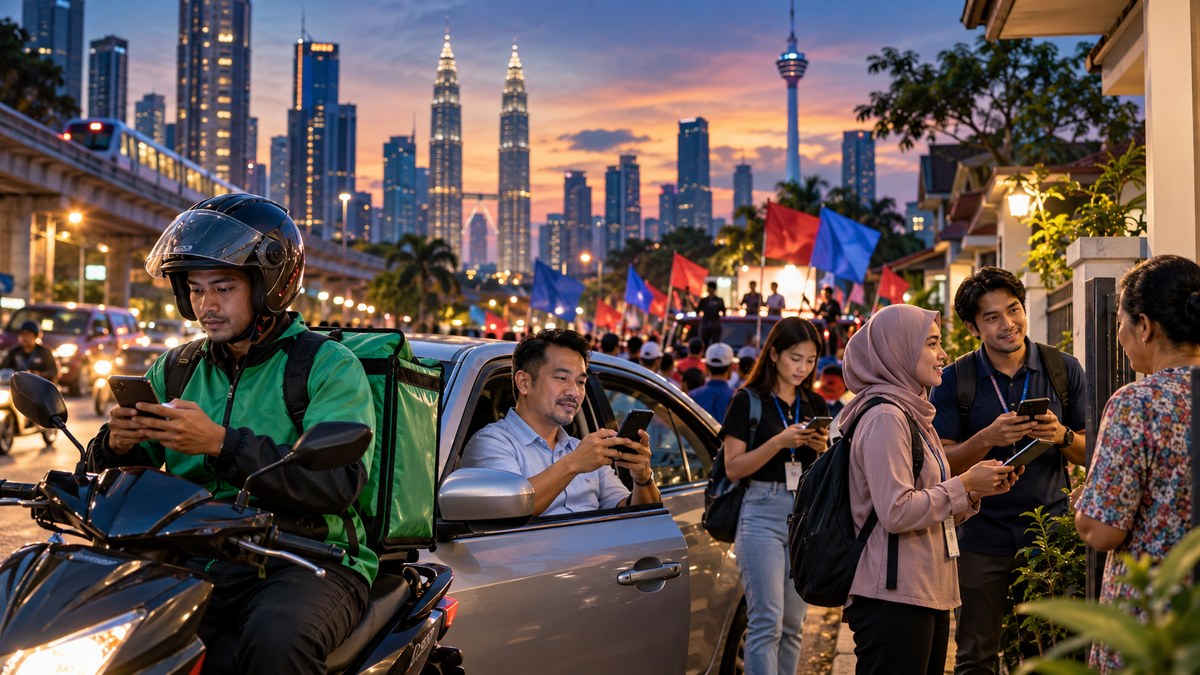
The Malaysia green technology political divide 2026 is also reshaping how parties campaign. Digital campaigns now feature targeted ads about solar subsidies for rural voters and carbon tax pledges for urban voters. Parties are using data analytics to micro-target messages on green issues, a tactic borrowed from US and European campaigns.
What political analysts should watch for
For researchers and journalists tracking this trend, here are the key indicators to monitor in the coming months:
-
Parliamentary voting records on energy bills. Watch for MPs who break party lines. These defections signal which constituencies are pressuring their representatives to take a different stance on green issues.
-
Coalition negotiation statements. When parties announce their pre-election pacts, pay attention to what they say about energy policy. Vague language means the issue is still contested internally. Specific commitments mean a faction has won the internal debate.
-
State government initiatives. States controlled by opposition parties may launch their own green programmes. This is a way for state leaders to appeal to urban voters without endorsing the federal government. The role of youth in shaping Malaysia’s political future is especially important here, as younger voters are more likely to support state-level climate action.
-
Business community signals. Malaysian companies are adapting to regional economic changes by investing in green technology. Their lobbying efforts will reveal which policies have corporate backing and which face industry resistance. The Malaysia business landscape 2026 shows that sustainability is no longer a niche concern for big corporations.
The three groups most affected by the divide
Different segments of the population experience this political shift in different ways. Understanding these groups helps explain why the divide is so difficult for party leaders to manage.
Young urban professionals in the Klang Valley, Penang, and Johor Bahru want aggressive climate action. They are willing to vote for any candidate, regardless of party, who promises strong green policies. This group is growing and becoming more politically active. They are the reason why even conservative parties now include environmental planks in their manifestos.
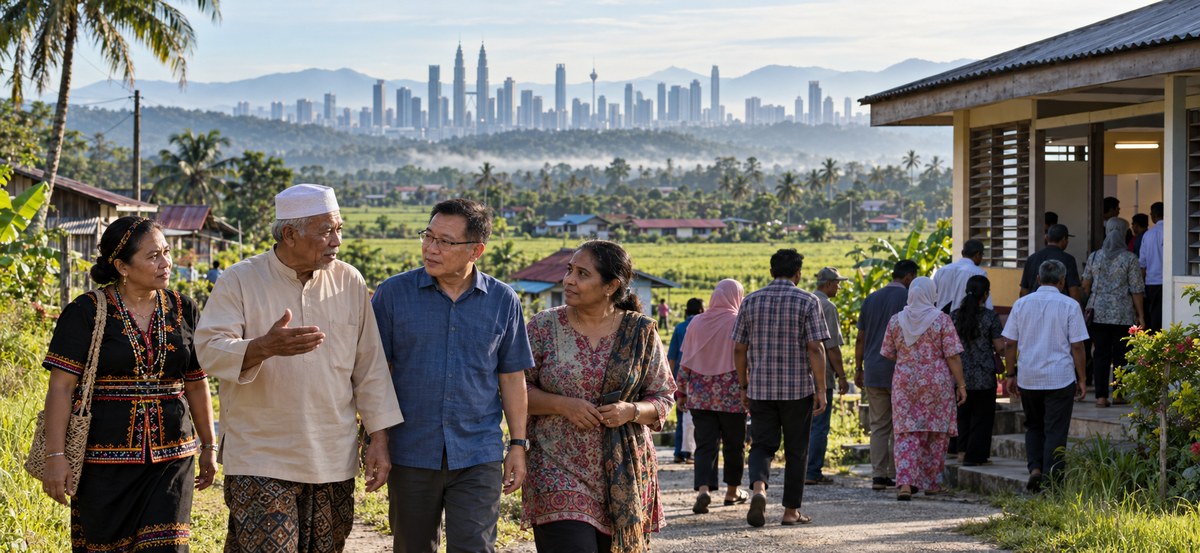
Rural smallholders and plantation workers fear that green policies will raise their costs or eliminate their jobs. They are sceptical of promises about a “green transition” because they have seen how economic shifts in the past have left rural communities behind. Politicians who ignore these fears do so at their own risk.
Business owners in carbon-intensive sectors face a direct financial threat from carbon taxes and emissions regulations. They lobby hard against these policies, often across party lines. Their influence explains why some politicians who sound pro-environment on the campaign trail vote against green bills in Parliament.
How the divide could reshape Malaysian politics
If the current trends continue, Malaysia could see a realignment of its party system. The old coalitions were built around ethnic and religious identities. The new coalitions may need to incorporate a green versus brown axis as well.
One possible outcome is that green technology policy becomes a litmus test for coalition membership. Parties that want to join a ruling coalition may need to accept a minimum set of climate commitments. This would make it harder for single-issue parties to join broad coalitions.
Another possibility is that new parties emerge specifically around environmental issues. So far, green parties in Malaysia have struggled to gain traction. But the current divide could create space for a party that attracts voters from across the old ethnic lines, united by a commitment to climate action. The emerging Malaysian tech startups scene has already shown that young Malaysians are willing to support new organisations that align with their values.
What this means for policy researchers
For those studying the intersection of environmental policy and politics, Malaysia offers a fascinating case. The country is not as polarised on climate issues as the United States or Australia. But it is moving in that direction. The key difference is that the divide does not follow left-right lines. It follows urban-rural, generational, and economic lines that cut across the existing party structure.
Researchers should pay attention to how different states implement federal green policies. States with strong local leadership may accelerate their own green transitions, creating pressure on neighbouring states to follow. This could lead to a patchwork of environmental regulations across the country, which would be a nightmare for businesses but a rich area for political research.
A new kind of political battle
The Malaysia green technology political divide 2026 is not a simple story of environmentalists versus climate deniers. It is a complex realignment of interests, identities, and alliances. It affects every level of Malaysian politics, from village council elections to the Prime Minister’s office.
For journalists covering this story, the challenge is to avoid framing it as a binary choice. The reality is more nuanced. A rural MP who opposes a carbon tax may still support solar subsidies for smallholders. An urban MP who champions EV infrastructure may vote against a coal phaseout that would cost jobs in their constituency. These contradictions are not signs of hypocrisy. They are signs of a political system adapting to a new set of pressures.
For voters, the divide creates both opportunities and risks. It offers a chance to hold politicians accountable on issues that affect their daily lives. But it also creates confusion, as party labels no longer reliably predict a candidate’s stance on green issues. The best approach is to look at voting records and policy proposals, not party affiliation.
Where the divide leads next
Malaysia’s political parties are still learning how to handle the green technology issue. Some will adapt successfully. Others will fracture. The parties that survive will be those that find a way to bridge the urban-rural gap on environmental policy. They will need to show rural voters that the green transition can benefit them, not just city dwellers.
The coming months will reveal which parties have the flexibility to evolve and which are stuck in old patterns. The 2026 general election will be the first real test of this new political landscape. Understanding Malaysia’s political landscape post-elections will require paying close attention to how green technology policy shaped voter choices in key seats.
For now, one thing is certain. The old rules of Malaysian politics no longer apply. Green technology has introduced a new force that is reshaping alliances, testing party loyalty, and forcing politicians to take stands they would have avoided just a few years ago. The next election will show us which parties have read the signs correctly and which have been left behind.
Whether you are a political analyst, a researcher, or simply a Malaysian voter trying to make sense of the changing landscape, the message is the same. Pay attention to green policy. It is no longer a niche issue. It is becoming one of the central battlegrounds of Malaysian politics. And the fight over it is only just beginning.





Leave a Reply