
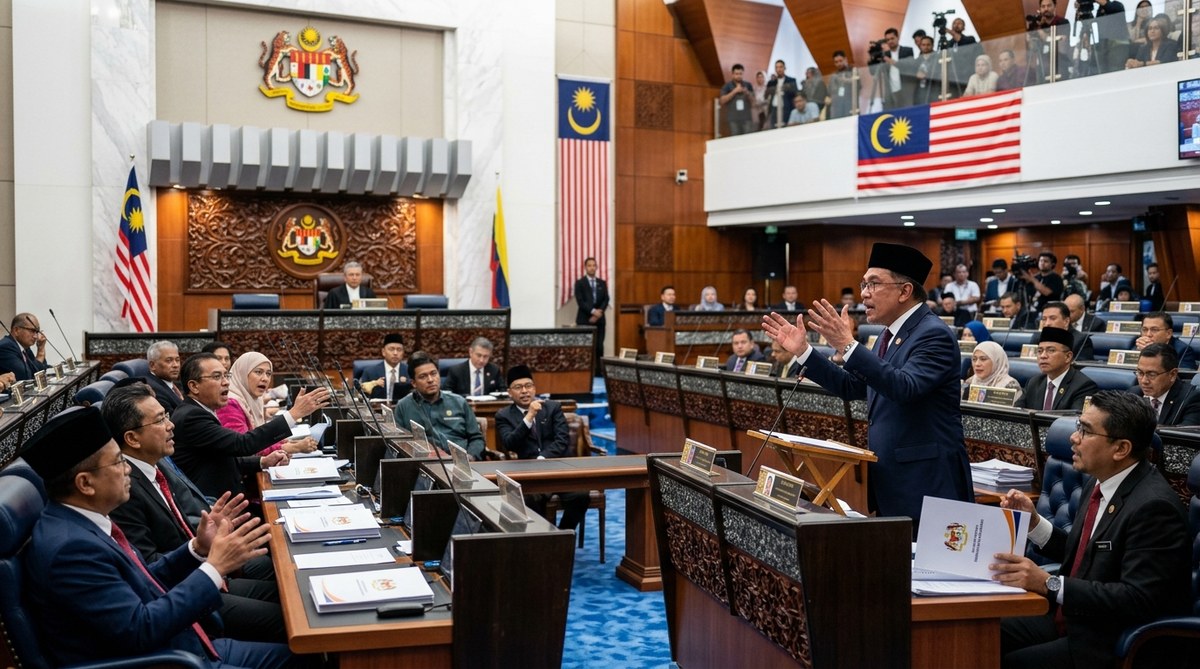
The Malaysian Parliament passed the revised Anti-Fake News Act in early 2026, and the political landscape has not been the same since. This law, which updates the original 2018 framework, gives authorities broader power to police online speech during election seasons and ordinary governance. For researchers tracking democratic backsliding in Southeast Asia, this legislation is a critical case study. It shows how a government can frame censorship as a public good while reshaping the rules of political engagement.
Malaysia’s 2026 Anti-Fake News Act gives the government wide latitude to prosecute content deemed false or harmful to public order. This has led to a measurable chilling effect on political commentary, opposition campaigning, and civil society reporting. The law is reshaping how politicians, journalists, and citizens communicate ahead of the coming general election.
The Core Provisions of the 2026 Law
The 2026 Anti-Fake News Act is not a minor tweak. It expands the definition of fake news to include any content that “causes public alarm or undermines confidence in public institutions.” This is deliberately broad. It covers text, images, videos, and memes shared on platforms like WhatsApp, TikTok, and Facebook.
Key changes from the earlier version include:
- Higher penalties for repeat offenders. Fines can now reach RM500,000, and prison terms extend to ten years.
- Liability for platform intermediaries. Social media companies must remove flagged content within 24 hours or face fines.
- No exemption for satire or parody. The law explicitly states that humour is not a defence if the content is deemed harmful.
- Extradition provisions. The government can request the extradition of Malaysian citizens living abroad who post content deemed fake.
These provisions are designed to be enforced quickly. The Malaysian Communications and Multimedia Commission (MCMC) now has a dedicated unit that scans social media for potential violations. They do not need a court order to issue a takedown notice.
How Political Discourse Has Changed
The most visible impact of the Malaysia anti-fake news law 2026 has been on political communication. Opposition politicians now operate with a higher level of caution. During the recent by-elections in Johor and Sabah, several candidates avoided making direct claims about government policy failures. They feared that citing unverified statistics could land them in court.
This has created an uneven playing field. The ruling coalition has access to official data and government press releases, which are automatically considered truthful. The opposition must rely on alternative sources that are more easily challenged as fake.
Journalists have also adjusted their behaviour. Major newsrooms now run every political story through a legal review before publication. This adds delays. In a fast moving news cycle, those delays can mean the difference between breaking a story and missing it entirely. Several editors told us they now avoid covering sensitive topics like the 1MDB trial updates or the Rimau Island naval base expansion unless they have official confirmation.
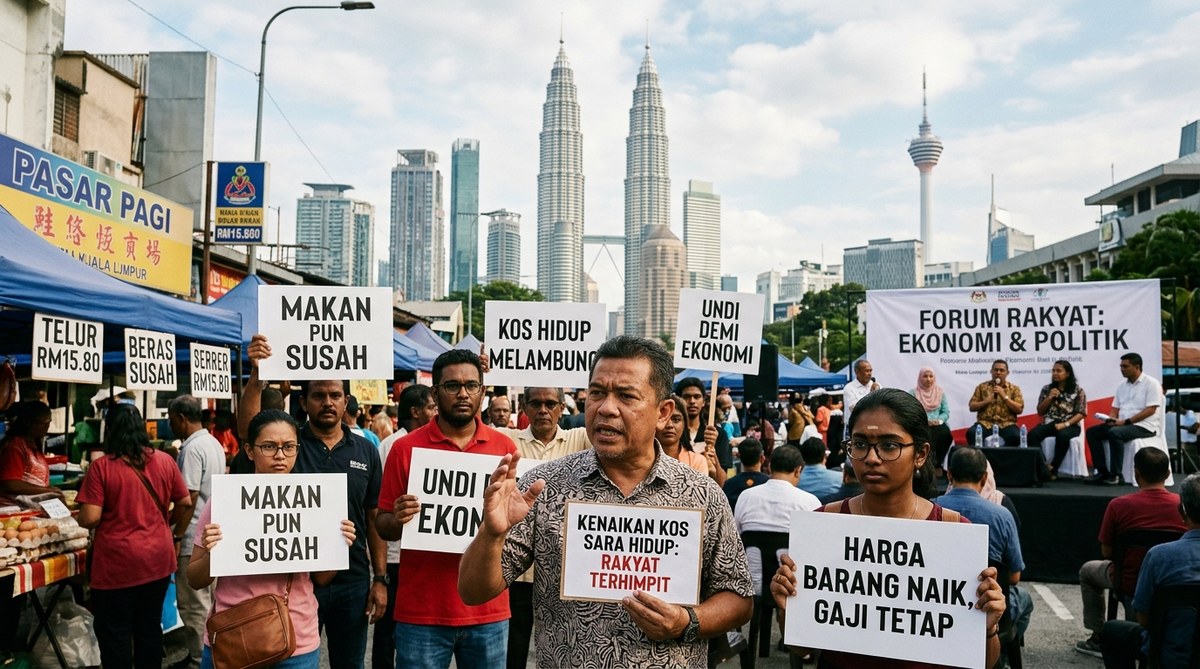
Citizens are self-censoring too. Focus groups conducted by Universiti Malaya researchers in mid-2026 found that seventy percent of respondents said they hesitated before sharing political news online. They worried about being reported by other users or flagged by automated systems.
A Practical Guide for Researchers and Journalists
If you are an academic or journalist covering Malaysian politics, you need a clear process for navigating this legal environment. Here is a numbered list of steps to follow when reporting on sensitive topics:
- Verify every claim against at least two independent sources. Official government data is safest, but cross check it with international indices or reports from organisations like SUARAM or the UN.
- Maintain a paper trail of all sources. Save screenshots, PDFs, and timestamps. If challenged, you need to prove that you reasonably believed the information was true.
- Use disclaimers when publishing analysis. A clear note that “this is an opinion based on publicly available data” can help distinguish commentary from factual reporting.
- Consult a Malaysian media lawyer before publishing. Several firms in Kuala Lumpur offer pro-bono advice for journalists. Use them.
- Avoid sharing unverified content on social media. Even a retweet or share can be considered publication under the law.
“The law is not designed to catch major disinformation campaigns. It is designed to catch critics. The safest path for any journalist is to stick strictly to government sources, but that defeats the purpose of independent reporting.” — Dr. Fatimah Zainal, media law researcher at Universiti Sains Malaysia.
Common Mistakes and How to Avoid Them
Researchers and journalists often make predictable errors when working under this law. The table below outlines the most frequent mistakes and the correct approach.
| Mistake | Why It Happens | Correct Approach |
|---|---|---|
| Relying on a single anonymous source | Pressure to publish fast | Wait for a second source or official confirmation |
| Using satire to criticise policy | Assumption that humour is protected | Avoid satire of government figures entirely |
| Sharing citizen videos without verification | Trusting viral content | Verify location, date, and context before sharing |
| Posting opinion without a disclaimer | Believing opinion is always safe | Add a clear “opinion” label to every commentary piece |
| Ignoring takedown notices | Thinking they are optional | Comply immediately, then challenge through legal channels |
The Chilling Effect on Civil Society
Civil society organisations have been hit hard. Groups like Bersih and the Malaysian Bar Council now run all public statements through a legal filter. This slows advocacy work. Some organisations have stopped issuing press releases on corruption cases altogether.
The law also affects academic research. Scholars studying political behaviour or public opinion must now be careful about how they frame their findings. A paper that concludes that government policies are unpopular could be flagged as fake news if it relies on survey data the government disputes. Several universities have instructed their researchers to submit political science papers for internal review before publication.
This is a major shift from the relatively open environment of 2023 and 2024. The current government has framed the law as a tool to protect national security and social harmony. Critics argue it is a mechanism to silence dissent ahead of the next general election, which must be held by early 2028.
Why This Matters for Regional Media Policy
Malaysia is not alone in tightening online speech laws. Indonesia passed a similar law in 2025. Thailand is debating one. Singapore already has the Protection from Online Falsehoods and Manipulation Act (POFMA). But Malaysia’s version is notable for its breadth and the speed of its enforcement.
For ASEAN watchers, the Malaysia anti-fake news law 2026 is a bellwether. If it survives legal challenges and remains popular with the public, other governments in the region may adopt similar frameworks. That would reshape political discourse across Southeast Asia, making it harder for opposition voices to gain traction.
The law also tests the limits of international human rights frameworks. Malaysia is a signatory to the International Covenant on Civil and Political Rights, which protects free expression. Several UN special rapporteurs have already issued statements criticising the law. But domestic courts have so far upheld it, citing the government’s duty to maintain public order.
Steps for Foreign Journalists Covering Malaysia
If you are a journalist based outside Malaysia, you still need to be careful. The law applies to content that is accessed in Malaysia, even if it is published abroad. Several foreign outlets have already received takedown requests for articles critical of the government.
Here are practical steps for foreign correspondents:
- Host your content on servers outside Malaysia if possible.
- Use a Malaysian legal advisor to review any article specifically about Malaysian politics.
- Avoid embedding tweets or Facebook posts from Malaysian critics, as that could be considered republication.
- Prepare a legal defence fund. The Malaysian courts can impose heavy fines on foreign entities.
The Future of Political Discourse in Malaysia
The long term effect of this law depends on how it is enforced. If it is used sparingly and only against clear disinformation, it might fade into the background. But early signs suggest aggressive enforcement. In the first six months of 2026, the MCMC took down over 1,200 pieces of content and opened 43 criminal investigations.
Opposition parties have called for the law to be repealed. Some ruling coalition members have also expressed private concerns. But the government shows no sign of backing down.
For researchers, this is a live experiment in democratic resilience. The question is whether Malaysian civil society, media, and political opposition can adapt to these new constraints or whether the law will permanently narrow the space for public debate.
How to Stay Informed and Compliant
If you are tracking these developments, you need reliable sources. Follow the official MCMC announcements, but also monitor statements from the Malaysian Bar Council and the Centre for Independent Journalism. International organisations like Reporters Without Borders and Article 19 also publish regular updates on Malaysia.
For a broader view of how these legal changes fit into the country’s political evolution, read our analysis on how Malaysia’s political landscape will evolve in 2026. You might also find our piece on 3 key parliamentary reforms that could change Malaysian governance in 2026 useful for understanding the wider institutional context.
What This Means for Your Work
Whether you are writing a journal article, a news story, or a policy brief, the Malaysia anti-fake news law 2026 must now be part of your analytical framework. It changes the incentives for every political actor in the country. It alters the risk calculus for journalists. And it sets a precedent that other governments in the region are watching closely.
Do not assume that this law will be struck down or softened. Plan your research and reporting as if it will remain in force for the foreseeable future. Build legal review into your workflow. And remember that the most important thing you can do is to verify, verify, and verify again.
The law is not going away. But with careful practice, you can continue to produce accurate, impactful work that holds power to account.



Leave a Reply