

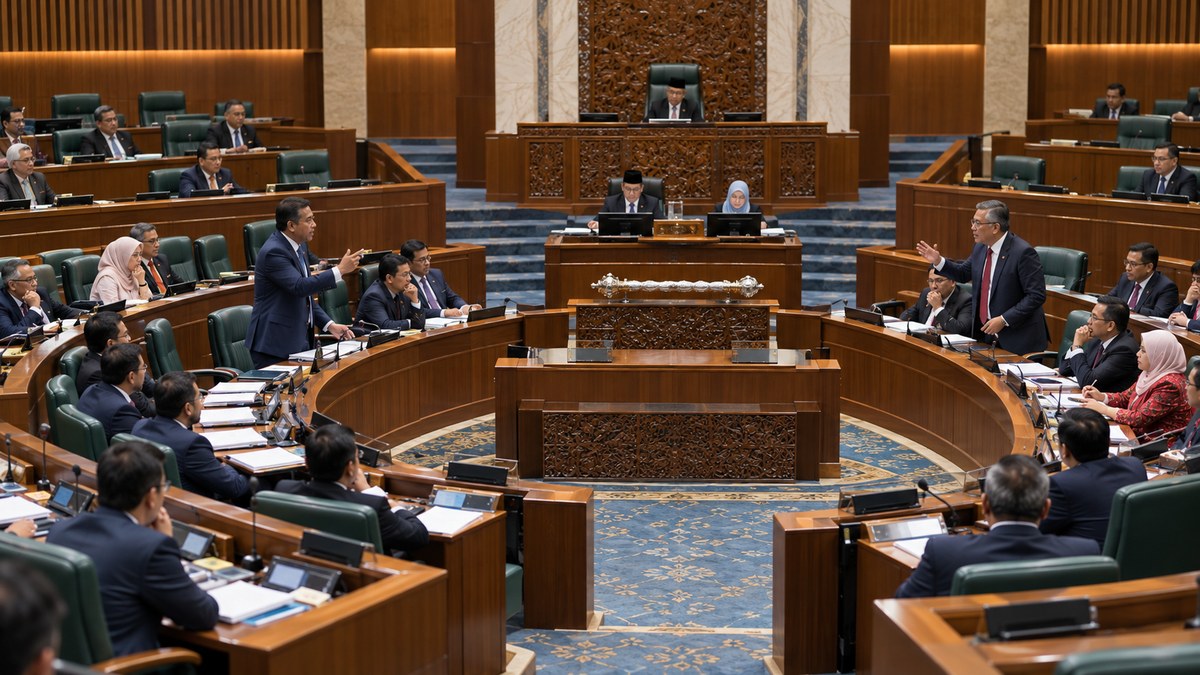
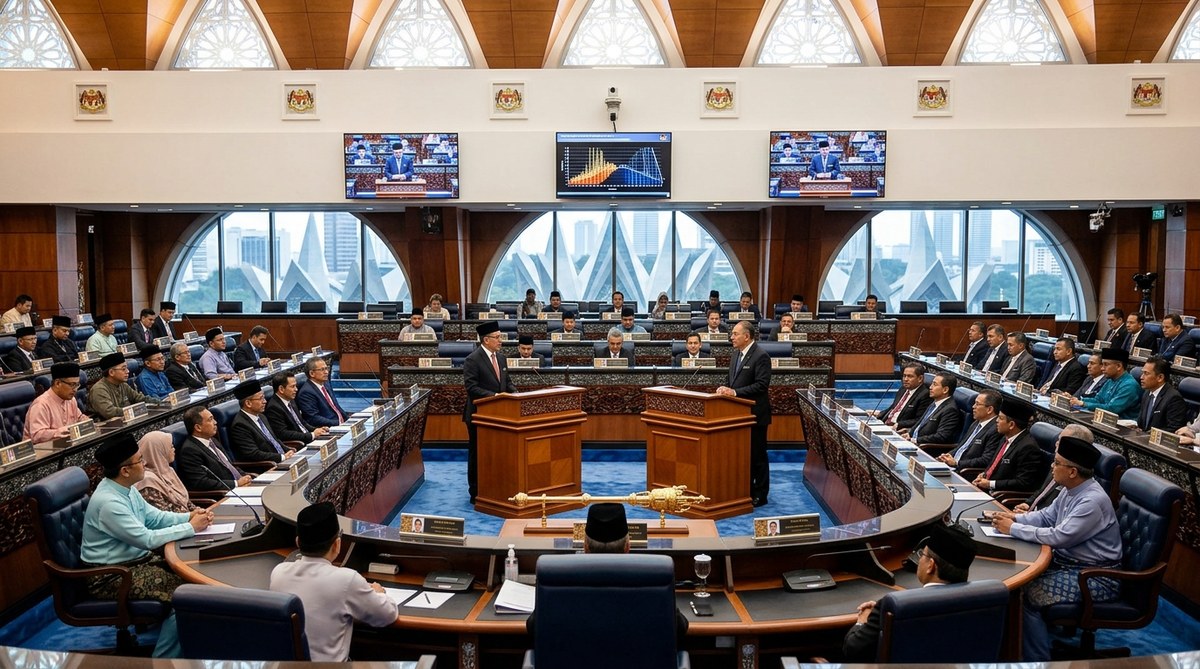
The Federal Court in Putrajaya is about to hear arguments that could reshape how Malaysia’s democracy works. When Parliament passed the anti-party hopping law in 2022, it was hailed as a cure for the political instability that plagued the nation after GE14 and GE15. Voters were tired of watching elected representatives switch sides without consequence. The law was supposed to stop that. But now, in 2026, the law itself is on trial. Several high-profile cases are testing its limits, and the rulings will set a precedent for every future election.
Malaysia’s anti-party hopping law is facing its first serious legal scrutiny in 2026. Three main arguments are being tested in court: whether the law violates freedom of association, whether it applies retroactively to MPs elected before it was passed, and how to define “party hopping” when coalitions merge or split. The outcomes will affect every politician and voter in the country.
Why the Law Is Being Tested Now
The anti-party hopping law was passed with bipartisan support after the “Sheraton Move” in 2020. That event saw multiple MPs leave their parties, causing the Pakatan Harapan government to collapse. The new law, which amended the Federal Constitution, states that an MP who defects from their party must vacate their seat. A by-election is then held.
For a few years, the law worked as intended. There were fewer defections. But the political landscape in Malaysia is never static. In 2025 and 2026, a series of disputes arose. Some MPs argued they did not “hop” but were pushed out. Others claimed the law should not apply to them because they were elected before it existed. And a few argued that the law itself is unconstitutional because it restricts their right to associate freely.
These arguments are now before the courts. The cases are being watched closely by legal professionals, political analysts, and ordinary Malaysians who want to know if their vote will still matter.
The Three Legal Battlegrounds
There are three main ways the anti-party hopping law is being challenged in court right now. Each one attacks a different part of the law’s foundation.
1. Does the Law Violate Freedom of Association?
Article 10 of the Federal Constitution guarantees every citizen the right to form associations. Some lawyers argue that forcing an MP to keep their party membership or lose their seat violates this right. They say an MP should be free to leave a party if their conscience demands it, without losing their job.
The government’s response is that the law does not ban an MP from leaving a party. It simply attaches a consequence to that choice. The MP can still resign from the party. They just cannot keep the seat they won under that party’s banner.
“The seat belongs to the party, not the individual. That is the principle of a party-list system, and it is the foundation of our anti-hopping law.” – Senior constitutional lawyer, speaking on condition of anonymity.
This argument is the most fundamental. If the court agrees that the law violates Article 10, the entire statute could be struck down. If it disagrees, the law stands, but the reasoning will define the limits of political freedom in Malaysia for decades.
2. Can the Law Apply to MPs Elected Before 2022?
Several MPs elected during GE14 in 2018 argue that the anti-party hopping law should not apply to them. They say the law changed the rules of the game after they had already won their seats. Applying it retroactively, they claim, is unfair and unconstitutional.
The government counters that the law is not retroactive. It does not punish past defections. It only applies to future actions. If an MP who was elected in 2018 chooses to hop today, they are making that choice knowing the law exists. The law does not reach back in time to punish them for something they did years ago.
This is a subtle but important distinction. The court will have to decide whether the law imposes a new condition on an existing term of office, or whether it simply regulates behaviour going forward.
3. What Counts as “Hopping” in a Coalition?
This is the messiest question. Many Malaysian parties operate within coalitions like Barisan Nasional, Pakatan Harapan, and Perikatan Nasional. Sometimes a party within a coalition decides to leave. Sometimes the coalition itself changes its structure. Does an MP who stays with their party but leaves a coalition count as a “hopper”?
The law says an MP hops if they leave the party they were elected under. But what if the party itself leaves the coalition? The MP did not change their party affiliation. They are still a member of the same party. Yet the political reality is that they have changed their alignment.
A few cases in 2026 are testing this exact point. One involves an MP from Sabah whose party switched coalitions. The MP stayed with the party but now sits with a different bloc in Parliament. The Election Commission says this is not a hop. The opposing parties disagree and have filed a challenge.
How the Court Process Works
For those following the cases, here is a simple breakdown of how a constitutional challenge moves through the Malaysian legal system.
- Filing the Originating Motion – The MP or their party files a motion in the High Court, arguing that the anti-hopping law is unconstitutional or was applied incorrectly.
- Judicial Review Hearing – A High Court judge hears arguments from both sides. The Attorney General’s Chambers usually defends the law.
- Appeal to the Court of Appeal – If either side loses, they appeal to the Court of Appeal. This is where most cases stop, but constitutional matters often go higher.
- Final Appeal to the Federal Court – The Federal Court has the final say on constitutional questions. Its decision is binding on all lower courts.
- Reference to the Federal Court – In some cases, the High Court or Court of Appeal can directly refer a constitutional question to the Federal Court without waiting for an appeal.
| Step | Court | What Happens |
|---|---|---|
| 1 | High Court | Motion filed; judge hears arguments |
| 2 | Court of Appeal | Losing party appeals the High Court decision |
| 3 | Federal Court | Final appeal; binding precedent set |
| 4 | Election Commission | Implements the court’s ruling; may call by-elections |
What This Means for Voters and Politicians
The stakes are high for everyone. If the court strikes down the law, MPs will be free to hop again. Malaysia could return to the instability of 2020 to 2022. If the court upholds the law broadly, every MP will think twice before switching sides.
For voters, the message is clear. Your vote for a party matters. If your MP leaves that party, they should face the voters again. That is the principle the law tries to protect.
For politicians, the calculus changes. Party hopping becomes a high-risk move. You might lose your seat and your income. But if the law is narrowed, hopping within a coalition might become a loophole that everyone uses.
There are also practical consequences for political parties. They must be careful about how they manage their coalitions. A merger or split could trigger a wave of by-elections if the courts interpret the law strictly.
A Look at the Key Players
Several prominent figures are involved in the current cases. Their identities reveal the cross-party nature of the challenges.
- A former minister from Perikatan Nasional who left his party after a leadership dispute.
- A backbencher from Pakatan Harapan who was sacked from his party for voting against the whip.
- A Sabah-based MP whose party switched from Gabungan Rakyat Sabah to Barisan Nasional.
Each case raises slightly different questions, but they all revolve around the same core issue: when does a change in political allegiance trigger a by-election?
The International Perspective
Malaysia is not alone in grappling with anti-hopping laws. India, Singapore, and the United Kingdom have similar rules, though they differ in detail.
- In India, the anti-defection law is strict. MPs who vote against their party can be disqualified. But the law has been criticised for suppressing dissent within parties.
- In Singapore, the law is similar to Malaysia’s. An MP who leaves their party must vacate their seat. The law is rarely challenged because Singapore’s political system is dominated by one party.
- In the United Kingdom, there is no general anti-hopping law. MPs can switch parties freely. But the public often punishes them at the next election.
Malaysia’s law sits somewhere in the middle. It is stricter than the UK but more flexible than India. The court’s interpretation will determine where it lands on that spectrum.
What to Watch For in the Coming Months
The Federal Court is expected to deliver its first major ruling on the anti-hopping law before the end of 2026. Until then, here are the key things to watch.
- The government’s defence – How strongly will the Attorney General defend the law? A weak defence could signal that the government is open to amendments.
- The coalition loophole – Will the court close the loophole that allows parties to switch coalitions without triggering by-elections?
- The retroactivity question – If the court says the law does not apply to pre-2022 MPs, those MPs will be free to hop without consequence. That could trigger a wave of defections.
How This Connects to Broader Political Trends
The anti-hopping law is just one piece of Malaysia’s evolving political puzzle. It interacts with other reforms and trends that are shaping the country’s governance in 2026.
For example, the push for greater parliamentary reforms is changing how MPs behave. Select committees are gaining power, and backbenchers have more influence. A strong anti-hopping law could make MPs more loyal to their parties, which might reduce the independence of these committees.
At the same time, the shifting coalitions in Malaysian politics are testing the law’s limits. New alliances are forming, and old ones are breaking apart. The courts will have to decide whether these changes count as “hopping” or not.
The law also affects federal-state relations. Sabah and Sarawak have their own political dynamics. State-level anti-hopping laws exist, but they are not identical to the federal one. Conflicts between the two levels of government could end up in court as well.
A Practical Guide for Citizens
If you are a Malaysian voter who wants to understand how the anti-hopping law affects you, here is a simple checklist.
- Know which party your MP belongs to. Not just the coalition, but the specific party.
- Pay attention to any announcements about party switches or coalition changes.
- If your MP changes parties, ask them directly: will they resign and trigger a by-election?
- Follow the court cases. The rulings will tell you whether your MP is required to resign or not.
- Vote in by-elections. They are your chance to either confirm or reject your MP’s new allegiance.
The Road Ahead for the Anti-Hopping Law
The anti-party hopping law was created to bring stability to Malaysian politics. In 2026, it faces its greatest test. The court’s decisions will either strengthen the law or weaken it. Either way, the outcome will shape the next general election and the future of democracy in Malaysia.
For legal professionals and political analysts, these cases are a masterclass in constitutional interpretation. For ordinary Malaysians, they are a reminder that the rules of the game matter. Your vote is only as powerful as the laws that protect it.
As the hearings continue, keep an eye on the arguments. They are not just legal technicalities. They are about whether your elected representative can change sides without asking for your permission first. That is a question worth answering.





Leave a Reply