

The kopitiam conversations across Kota Kinabalu and Kuching have a new edge these days. Over a cup of steamed coffee, talk turns to MA63, special grants, and who really controls the oil and gas. It is not just bar chat. The political centre in Putrajaya is feeling the weight of Borneo’s growing demand for parity. For decades, Sabah and Sarawak were treated as fixed deposits in Malaysia’s electoral math. But 2026 marks a turning point. Their collective voice is no longer a whisper; it is a clear signal that the federal power distribution must change.
Sabah and Sarawak have moved from being passive recipients of federal policy to active negotiators with real political leverage. In 2026, their demands for a fairer share of revenue, control over natural resources, and constitutional recognition are forcing Putrajaya to reconsider the entire federal compact. The outcome will shape Malaysia’s governance for decades.
The Momentum Behind Borneo's Political Ascent
The push for power sharing is not new. The Malaysia Agreement 1963 (MA63) promised a partnership of equals, not a subordinate arrangement. Yet for generations, Sabah and Sarawak endured a governance model that treated them as less than partners. Infrastructure lagged. Revenue from their rich resources flowed mostly to the peninsula. They felt the sting of federal overreach.
But the tide turned around 2018, when the change in federal government reopened the MA63 dialogue. That momentum continued through the 2020s, with both states consistently demanding their rights under the constitution. By 2026, the conversation has shifted from mere rights to real power. The recent amendments to Article 1(2) have restored Sabah and Sarawak as equal partners in federation formation, but the practical implementation remains a work in progress.
What changed? A combination of factors. First, the political fragmentation in Peninsular Malaysia has made the Borneo states essential kingmakers. No stable governing coalition can ignore 56 parliamentary seats. Second, the rise of assertive local leaders who prioritise state rights has created a united front. Third, the federal government needs economic growth, and the resources of Sabah and Sarawak are central to that strategy.
Key Demands Driving the Shift
The demands from both states have crystalised into a clear wish list. Here are the main ones:
- 40 percent net revenue entitlement for Sabah under Article 112C of the Federal Constitution, long unpaid and now a red line issue.
- Special grants review so that the annual payments reflect true development needs, not decades old formulas.
- Full control over oil and gas within state boundaries, ending Petronas' monopoly on resource extraction.
- Devolution of health and education administration so that state governments can manage hospitals and schools better suited to local needs.
- Increase in parliamentary seats to reflect population growth and political weight, especially for Sabah.
Each demand is backed by legal arguments rooted in MA63. The Borneo states are no longer asking politely. They are negotiating with the leverage of potential coalition support.
Measuring the Impact: A Shift in Federal Bargaining Power
To see how far things have come, look at the table below. It compares the situation before 2022 with where we stand in 2026.
| Issue | Before 2022 | Status in 2026 |
|---|---|---|
| Revenue sharing | Fixed RM26.7 million special grant for Sabah, unchanged for decades | Special grant agreed at RM300 million, still under negotiation for 40% formula |
| Oil and gas control | Petronas held exclusive rights, states got minimal cash | Sarawak owns Petronas' local assets; Sabah negotiating for similar deal |
| Federal appointments | Minimal representation in cabinet and key posts | Both states hold deputy prime minister and several ministerial posts |
| Devolution of health | Federally run hospitals, slow approvals | Sabah to pilot health devolution in 2027; Sarawak already manages certain hospitals |
| Parliamentary seats | 25 for Sabah, 31 for Sarawak (combined 56) | Discussions to increase to 33 and 38 respectively under next redelineation |
The shift is clear. On paper, the federal government has moved significantly. But many analysts argue the real test lies in implementation. The table shows progress, but the gap between promise and delivery remains.
How the Federal Government Has Responded in 2026
The Putrajaya administration has had little choice but to respond. Here are the notable steps taken so far this year:
- Established the Joint Federal-State Development Council with equal representation from Sabah, Sarawak, and the federation. It meets quarterly to resolve implementation issues.
- Passed a parliamentary resolution to expedite the restoration of MA63 rights, creating a binding timeline for outstanding demands.
- Commenced the pilot devolution of health services in Sabah, with a full handover expected by 2027. Sarawak already runs its own health department.
- Agreed to a new special grant formula that increases annual payments to Sabah to RM300 million, with further increments tied to federal revenue growth.
- Launched a review of oil and gas royalty rates from 5 percent to potentially 10 percent for Sabah, while Sarawak retains its 10 percent plus equity stake.
These steps are significant. But they also reveal the tension. Federal ministries sometimes resist losing control. Bureaucratic inertia is real, especially in departments accustomed to managing from Kuala Lumpur.
"The federal government has finally acknowledged that Sabah and Sarawak are not just states; they are founding partners. But acknowledgement is not implementation. The real test will be the next election cycle. If the promises are not kept, the Borneo bloc could walk away from any federal coalition." – Professor James Chin, University of Tasmania, in a recent interview.
What This Means for the Next General Election
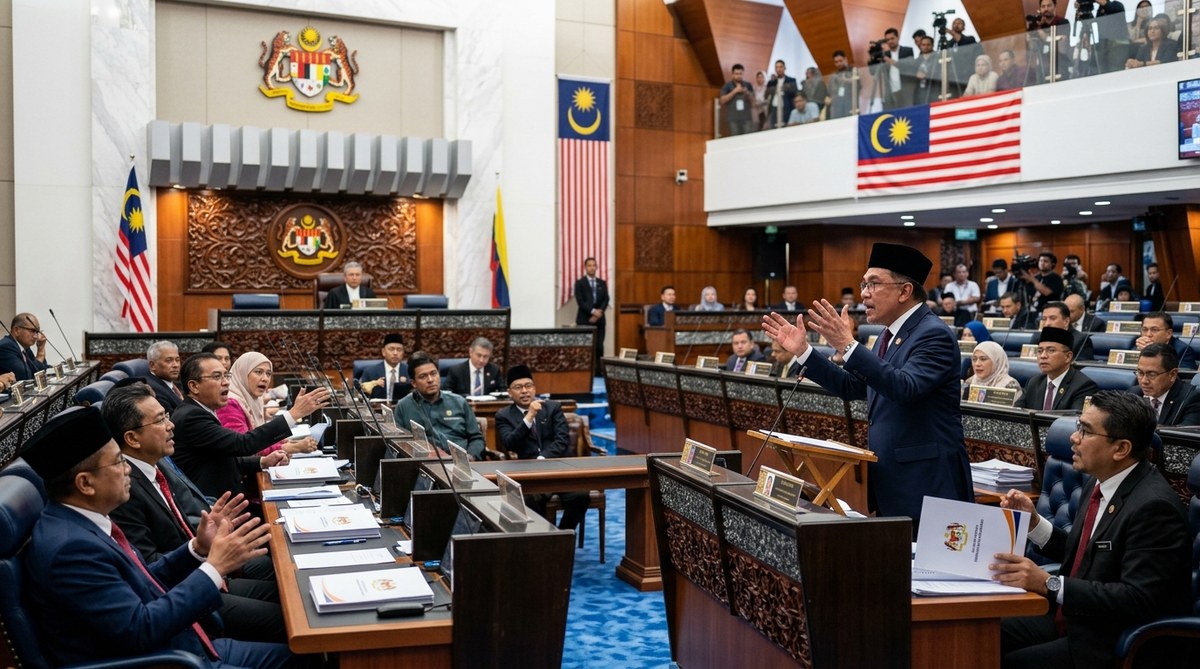
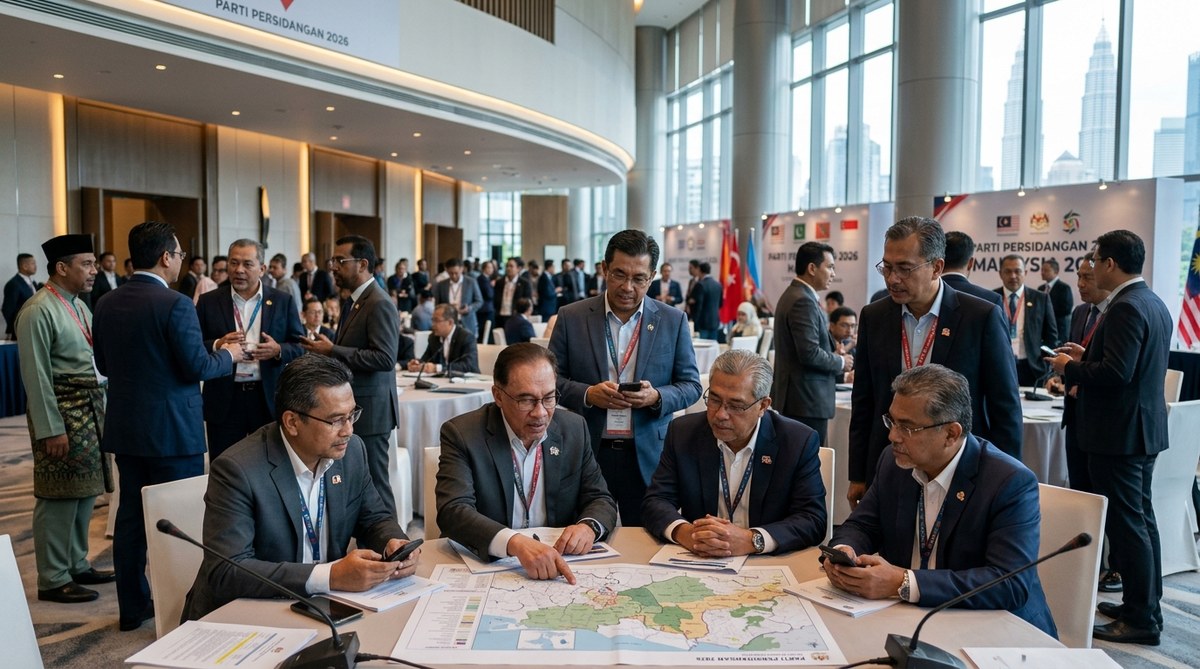
Malaysia is gearing up for a general election due by 2028, but many expect an earlier poll in 2026 or 2027. The Borneo states will be the decisive battleground. No major coalition can win a simple majority without strong performance in Sabah and Sarawak.
The growing political voice of these states means that any future federal government must govern with their interests at the forefront. This is not just about horse trading for seats. It is about a structural rebalancing of power. The day when a Peninsular party could impose its will on Borneo is over. The states now negotiate as equals.
For the average Malaysian in Peninsular Malaysia, this shift might seem like a distant affair. But the consequences are direct. A larger share of revenue for Sabah and Sarawak means less money for federal projects elsewhere. It also means that policies on education, health, and immigration will differ significantly from the peninsula. Malaysia is becoming a more federalised nation, one where states have genuine autonomy.
Challenges That Remain
Despite the progress, several hurdles stand in the way of full power sharing.
- Political fragmentation within Sabah and Sarawak. Local parties often disagree on strategy, weakening their bargaining position. For example, Gabungan Parti Sarawak (GPS) and Pakatan Harapan aligned parties in Sabah sometimes push in different directions.
- Resistance from entrenched federal agencies. Petronas, the Treasury, and the Education Ministry have historically resisted losing control. Changing their culture takes time.
- Economic disparity. Even with more revenue, both states lack the administrative capacity to take over certain functions overnight. Devolution requires trained staff and systems.
- Constitutional limits. Some demands require a two thirds parliamentary majority, which is difficult to achieve without cross coalition support.
- Public expectation versus delivery. Citizens in Sabah and Sarawak have high hopes. If promised reforms stall, frustration could turn into political instability.
These challenges are not insurmountable, but they require patience and persistent negotiation. The momentum is on the side of the Borneo states, but the endgame is not yet written.
Navigating the New Federal Equilibrium
The conversation around Sabah and Sarawak’s growing political voice is not just about the two states. It is about what kind of Malaysia we want to live in. A Malaysia where power is shared fairly, where the founding principles of MA63 are honoured, and where every region has a genuine seat at the table.
For the politically engaged Malaysian, this is an exciting and hopeful time. The old model of centralised control is bending. A more balanced federation is emerging. But it will require vigilance and active citizenship from all of us. Follow the negotiations. Ask questions of your elected representatives. Support parties that commit to full implementation of MA63.
The federal power shift is real. And in 2026, the voices of Sabah and Sarawak are shaping the future of Malaysia.







Leave a Reply