
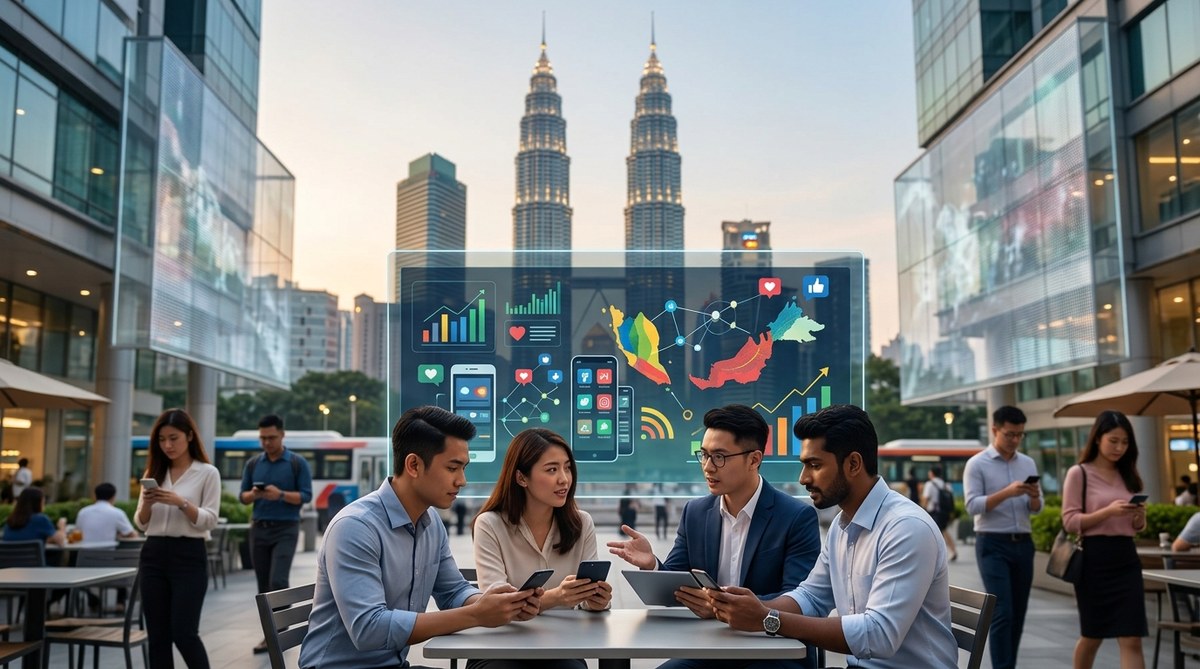
The ceramah circuit is still alive, but the real battleground for the 2026 elections has shifted to screens. In Malaysia, where smartphone penetration tops 90% and platforms like TikTok, WhatsApp, and X dominate daily life, parties are building their strategies around digital tools. For a political researcher or analyst tracking these changes, the question is no longer whether digital campaigns matter. It is about which tactics actually work and how the landscape is evolving under new regulations and shifting voter behaviour.
Malaysia’s 2026 digital campaigns rely on hyper localised AI chatbots, micro targeting through WhatsApp broadcast lists, and TikTok live streams that bypass traditional media gatekeepers. Parties also invest in sentiment analysis tools to adapt messaging in real time. Success hinges on balancing data driven outreach with strict compliance to the new 2025 Election Offences Act amendments. Researchers should monitor how these tools reshape voter engagement, especially among the undecided youth and rural first time voters.
The Digital Shift: From Ceramah to Chatbots
Walking through a pasar malam in Johor Bahru last month, I noticed something unusual. A candidate’s team wasn’t handing out flyers. Instead, they were scanning QR codes on phone screens. “Scan and join our WhatsApp group,” a volunteer said. “You get daily updates on local issues.” That simple interaction sums up the transformation. In 2026, a party’s digital presence is often the first point of contact with a voter.
The shift accelerated after the 2022 general election, where social media played a pivotal role in mobilising young voters. By 2026, nearly every major coalition including Pakatan Harapan, Perikatan Nasional, Barisan Nasional and minority parties has a dedicated digital unit. Some even hire full time data analysts and content creators. This is not just about posting on Facebook. It involves coordinated campaigns across multiple channels, AI powered messaging, and real time monitoring.
Five Tactics That Define Malaysia’s 2026 Digital Campaigns
Here are the five processes that researchers consistently see in successful campaign strategies this year.
-
Micro targeting via WhatsApp blast groups. Parties segment voters by age, location, and past voting behaviour. Broadcast lists allow them to send customised messages to thousands without cluttering a group chat. For example, a candidate in Penang might send a voice note about public transport delays to voters in that specific suburb, while a separate cohort in Kelantan receives updates on flood relief efforts.
-
AI generated local language content. Using tools like ChatGPT and localised language models, parties produce campaign materials in Bahasa Malaysia, Mandarin, Tamil, and even regional dialects like Kelantanese. This ensures authenticity and avoids the old stigma of “top down” messaging.
-
TikTok Live ceramah with two way Q&A. Instead of one hour speeches under a tent, politicians now host 15 minute live sessions where they answer questions from viewers in real time. Viewers can send gifts (digital donations) that translate into real campaign funds. This model, adapted from popular streamers, has proven especially effective among voters aged 18 to 30.
-
Sentiment analysis dashboards. Parties subscribe to services that scrape public social media posts, forum comments (like those on Reddit Malaysia or Lowyat.NET), and even WhatsApp group messages (where legally allowed) to gauge public mood. Adjustments to talking points happen within hours, not days.
-
Geotargeted video ads on YouTube and TikTok. Instead of national ad buys, campaigns now run ads that appear only for voters in specific parliamentary constituencies. A resident in Shah Alam might see a different ad than someone in Kuala Terengganu, based on local issues like potholes, school closures, or water cuts.
These tactics are not isolated. They work together. A sentiment dashboard may reveal rising anger about a toll hike in Selangor. Within an hour, a candidate’s team records a TikTok video addressing the issue, pushes a WhatsApp broadcast to affected voters, and boosts a geotargeted ad in that area.
Techniques vs. Missteps: A Researcher’s Cheat Sheet
Not everything works. The table below outlines common techniques and the mistakes that analysts have observed in 2026 campaigns.
| Technique | Common Mistake | Better Approach |
|---|---|---|
| AI generated video dubbing | Overly polished, robotic voices that feel fake | Use local voice actors or the candidate’s own voice, even if imperfect |
| WhatsApp broadcast lists | Sending too many messages daily, causing unsubscribes | Limit to 2 3 messages per week; focus on value (event invites, local news) |
| TikTok Live sessions | Reading from a script; ignoring comments | Engage directly with screen names, answer even critical questions |
| Sentiment data analysis | Relying only on English and BM sources; missing Mandarin and Tamil conversations | Include multilingual social listening tools and hire native speakers |
| Geotargeted ads | Using generic national slogans | Reference specific street names, local landmarks, or recent community problems |
A researcher studying these campaigns should pay special attention to the “better approach” column. The difference between a successful digital outreach and a backfire often lies in localisation and authenticity.
Platforms That Matter in 2026
Candidates and analysts alike focus on these four platforms, each serving a different voter segment.
- WhatsApp: The backbone of organised campaigning. Party workers maintain hundreds of groups. For researchers, the key metric is not just group size but engagement rate (replies, forwards, clicks on links). Early adopters of WhatsApp Channels have also seen higher reach.
- TikTok: Dominates among voters under 30. Short form videos with upbeat music and humour outperform traditional policy explanations. However, parties must be careful not to violate TikTok’s election integrity policies, which now ban coordinated inauthentic behaviour.
- Facebook: Still vital for voters over 40, especially in rural areas. Facebook Groups for specific communities (like “Ibu bapa di Taman Mutiara”) are gold mines for hyperlocal issues.
- X (formerly Twitter): Used mainly for elite opinion shaping, journalist engagement, and rapid rebuttals. Researchers should monitor hashtag trends during debates and breaking news events.
“The biggest mistake I see in 2026 is parties treating each platform in isolation. A voter might see a TikTok video, then search for the candidate on Facebook, then join a WhatsApp group. Your data must track that journey. Otherwise you are flying blind.” Dr. Kamal Aziz, political communications analyst and author of “Screen to Ballot: Digital Campaigns in Southeast Asia”
Dr. Kamal’s point is critical. The voter’s path from awareness to support is nonlinear. A single campaign message should be adapted for each platform’s tone and audience, but the core narrative must remain consistent.
Data Privacy and Regulation: The New Frontier
Researchers monitoring Malaysia digital political campaigns 2026 must also consider the regulatory environment. The 2025 amendments to the Election Offences Act introduced stricter rules on digital advertising transparency. All political ads must now include a disclosure statement identifying the sponsor. Foreign funding for digital campaigns is banned. Violators face fines up to RM 500,000 or imprisonment.
Additionally, the Personal Data Protection Act (PDPA) 2010 has been strengthened after public outcry over data leaks. Campaigns cannot collect voter data without explicit consent. This affects how parties build their WhatsApp groups and use micro targeting. Several coalitions have already been fined for scraping data from public Facebook profiles without permission.
For a political analyst, these legal constraints create a fascinating tension. Parties want to use every data point available, but they must navigate tighter rules. The smartest campaigns invest in compliance upfront, treating data ethics as a competitive advantage rather than a burden.
How Youth and Rural Voters Respond
Two demographic groups will determine the outcome of any election in 2026: undecided youth (18 25) and rural first time voters (especially in Sabah and Sarawak). Digital campaigns have different effects on each.
Young voters are more sceptical of polished ads. They trust peer recommendations and viral content. A candidate’s dance challenge on TikTok may seem trivial, but it builds name recognition. Researchers have found that a candidate who appears in a popular meme format gains a 12% recall advantage among young voters. However, that same candidate must then deliver substance when asked about issues like job creation or education.
Rural voters, especially in areas with limited internet coverage, still rely on hybrid approaches. A party might use WhatsApp to coordinate in person meetings, but the final persuasion happens face to face. The digital tool is an amplifier, not a replacement. For analysts, the mistake is to assume that digital alone can win rural seats. The most effective campaigns blend old and new: a ceramah advertised via WhatsApp, broadcast live on TikTok, followed by a Q&A session where physical attendees ask questions that are also streamed online.
To understand the broader forces reshaping the country’s political dynamics, researchers should read how Malaysia’s political landscape will evolve in 2026. The digital is just one layer of a much more complex transformation.
Preparing for the Next Wave
As we move through the second half of 2026, three trends are emerging that analysts should track.
The first is the use of generative AI for personalised voice messages. Imagine a voter receives a voice note from their local MP that sounds authentic but is entirely generated by AI, addressing them by name and referencing a local issue. The technology is already here. The ethical question is whether parties will overuse it and erode trust.
The second trend is the rise of “gamification” in voter engagement. Some campaigns now offer small tokens (like e wallet credits or meal vouchers) for sharing content or attending live streams. While not illegal yet, the Election Commission has issued warnings about potential vote buying. This grey area will likely be clarified by 2027.
The third trend is cross platform data integration. Advanced campaigns now use Customer Data Platforms (CDPs) that merge data from WhatsApp, TikTok, Facebook, and in person canvassing. This allows a single view of each voter’s engagement history. For researchers, this raises questions about surveillance and privacy that go beyond current regulation.
What Researchers Should Watch Next
Digital campaigns in Malaysia are no longer experimental. They are mainstream. But the tools evolve every month. For a political analyst, the most valuable skill in 2026 is not just tracking what parties do, but understanding why they do it and how voters perceive those actions.
If you are following the upcoming state elections, pay attention to the digital strategies in Kelantan, Sabah, and Selangor. They will set the template for the next general election. And if you want to see how this digital shift intersects with broader government changes, read about how Malaysia’s civil service reform is redefining governance in 2026. The same technology that changes campaigns also changes how government communicates.
Keep your screen brightness high, your WhatsApp notifications on, and your data analysis skills sharp. The digital campaign landscape in Malaysia is moving fast, and the only way to keep up is to stay curious.



Leave a Reply