
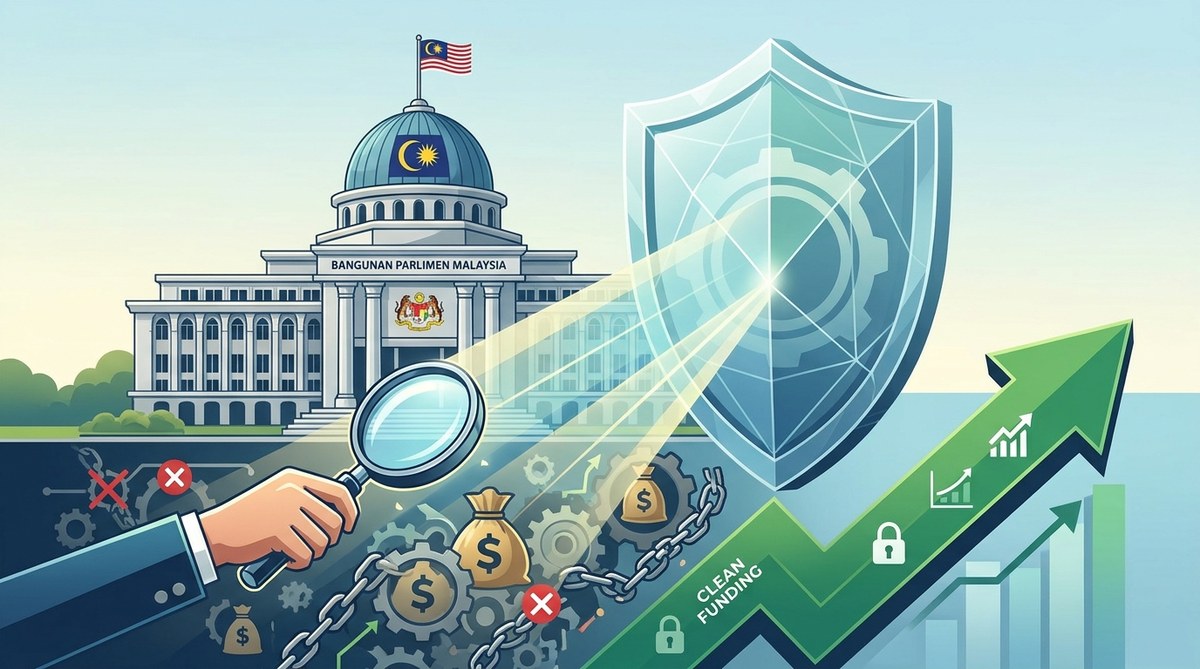
The Malaysian Anti-Corruption Commission (MACC) has drawn a line in the sand. In 2026, the fight against graft is moving past the usual suspects of procurement kickbacks and bribery. The new frontier is political funding. After years of opaque donation schemes and unregulated party financing, Putrajaya is finally moving to plug the gaps that have allowed money to flow through the political system with little scrutiny. For anyone who has followed Malaysia’s political soap opera, this feels like a long overdue reckoning.
Malaysia’s 2026 anti-corruption strategy targets three major political funding loopholes: anonymous donations, third-party intermediaries, and unregulated party loans. The proposed laws would force parties to disclose donors, cap contributions, and create a central oversight body. If passed, these reforms could reshape how every coalition raises and spends money during election cycles.
Where the money hides now
Political funding in Malaysia has always been a murky business. Parties have relied on a mix of legitimate donations, business favours, and outright hidden transfers. The problem is not that politicians raise money. It is that they do so without any real obligation to say where it came from.
Consider this scenario. A developer wants to secure a government contract. Instead of handing cash directly to a minister, the company donates to the minister’s party foundation. That donation is classified as a charitable gift. No one asks questions. The contract gets approved. Everyone walks away clean.
This is not a hypothetical case. It is a pattern that has repeated itself across state and federal governments for decades. The 2026 reforms aim to break this cycle by targeting three specific loopholes.
The three main loopholes
- Anonymous donations: Currently, parties can accept cash donations without naming the giver. This allows individuals and corporations to fund campaigns without public accountability.
- Third-party intermediaries: Foundations, think tanks, and even religious bodies are used as pass-throughs. Money enters these groups from unknown sources, then flows to political parties as “grants” or “sponsorships.”
- Unregulated party loans: Parties borrow from friendly businesses or individuals. These loans are not treated as donations, so they avoid disclosure rules. When the party wins, the loan is often forgiven or repaid through favourable policy decisions.
The proposed legal fixes
The government has outlined a three law approach to close these gaps. Here is how each one is supposed to work.
- Political Funding Disclosure Act: This law would require all political parties to submit quarterly reports detailing any donation above RM5,000. Donors would be named, and the source of funds would need to be verified. Failure to comply would result in fines and potential deregistration of the party.
- Campaign Finance Limitation Act: This would cap the amount any single individual or company can donate to a party in a single year. The proposed limit is RM200,000 per donor. This prevents wealthy interests from buying outsized influence.
- Third-Party Transparency Act: Any organisation that transfers more than RM50,000 to a political party in a year would need to register as a political intermediary. They would have to disclose their own funding sources, preventing the use of shell foundations to launder donations.
How the system would work in practice
Imagine you are a party treasurer in 2027, after these laws are in place. Your workflow would look something like this.
- Receive a donation from a corporate supporter. You log it into the party’s central database, including the donor’s name, IC number or company registration number, and the amount.
- The system cross-checks the donor against a central registry. If the donor has already given RM180,000 to other parties this year, the system flags the excess. You must return the overage.
- If the donation comes through a foundation, you verify that the foundation has registered as an intermediary. If not, you cannot accept the funds.
- At the end of the quarter, the party submits its report to a new independent body, the Political Funding Oversight Commission. The report is published online for public scrutiny.
This is the vision. The reality will depend on enforcement.
Enforcement challenges ahead
Even the best laws fail without proper implementation. Malaysia’s anti-corruption history is full of strong rules that were poorly enforced. The 2026 drive faces several hurdles.
| Challenge | Risk | Mitigation |
|---|---|---|
| Weak party compliance | Parties may under-report or delay reports | Automatic fines and public naming |
| Fake donors | Individuals used as fronts for real funders | Source of wealth checks for large donors |
| Cross-border funding | Money from overseas routed through Singapore or Hong Kong | Enhanced scrutiny on foreign-linked accounts |
| Cash retention | Parties keep using physical cash | Ban on cash donations above RM1,000 |
| Judicial backlog | Cases take years to process | Dedicated anti-corruption court for funding cases |
The MACC has already signalled that it will go after the enablers, not just the recipients. Accountants, lawyers, and bankers who help structure hidden donations could face charges.
“We are not just looking at the politicians who take the money. We are looking at the ecosystem that moves it. The fixers, the intermediaries, and the professionals who sign off on these transactions will all be held accountable.”
A senior MACC investigator, speaking on condition of anonymity.
What this means for the next election
Malaysia’s next general election must be held by 2028, but many analysts expect it to come sooner. The 2026 reforms are timed to be fully operational before the campaign period begins. If they work, voters will have more information than ever before about who funds which party.
This could change voting behaviour. A swing voter in Johor might think twice about supporting a candidate whose party took RM2 million from a logging company linked to deforestation. A young voter in Penang might prefer a party that publishes its donors openly over one that fights the disclosure rules.
Of course, the parties themselves are not uniformly supportive. Some coalitions have already argued that disclosure will scare away donors and hurt their ability to compete. Others worry about donor fatigue if limits are too low. The debate is likely to dominate Parliament in the coming months.
For a closer look at how these reforms fit into the bigger picture of governance, you can read our analysis on how Malaysia’s civil service reform is redefining governance in 2026.
A new standard for transparency
Malaysia is not alone in this fight. Across Southeast Asia, countries are grappling with the same question: how do you fund democracy without corrupting it? Indonesia has introduced donor caps. Thailand has experimented with public funding for parties. The Philippines requires full disclosure of campaign spending.
Malaysia’s approach is notable because it targets the entire funding chain, not just the final recipient. By regulating intermediaries and loans, the government is trying to close every door that money can slip through.
The success of this drive will depend on three things. First, the laws must pass without being gutted by amendments. Second, the oversight commission must be genuinely independent, not a creature of the ruling party. Third, the public must stay engaged. Transparency only works if voters pay attention.
The role of citizens and civil society
You do not have to be a policy analyst to participate in this process. The proposed laws include a public comment period. Civil society groups like the Institute for Democracy and Economic Affairs (IDEAS) and the Malaysian Bar are already preparing detailed submissions.
Here is how you can get involved.
- Read the draft bills when they are tabled. They will be available on the Parliament website.
- Submit your feedback through the formal consultation process.
- Ask your local MP where they stand on each provision. A simple email or social media message can make a difference.
- Support organisations that track political funding. Their work keeps the pressure on.
The more people who pay attention, the harder it is for loopholes to survive.
What happens if the reforms fail
There is a real risk that these laws could pass but be rendered useless through weak enforcement or legal challenges. If that happens, the status quo returns. Money will continue to flow through untraceable channels. Each election cycle will bring new scandals, and public trust will erode further.
But there is also a brighter possibility. If the reforms work, Malaysia could become a model for political finance transparency in the region. Other ASEAN countries are watching closely. A success story here could trigger a domino effect across Southeast Asia.
To understand how this fits into the broader political shifts, take a look at our piece on how Malaysia’s political landscape will evolve in 2026.
A chance to rewrite the rules
Malaysia has a habit of making grand promises on corruption, only to see them fade away. The 1MDB scandal was supposed to be a turning point. Then came the recovery of assets, the trials, and the promises of reform. Yet the system that allowed 1MDB to happen remained largely intact.
The 2026 anti-corruption drive is different because it goes after the fuel, not just the fire. Political funding is the gasoline that powers graft. If you can control how money enters politics, you can reduce the incentive for corruption at every level.
This is not a silver bullet. No single law can erase decades of entrenched behaviour. But it is a serious attempt to build a firewall. For policy analysts, journalists, and engaged citizens, this is the story to watch in 2026.
What to watch for in the coming months
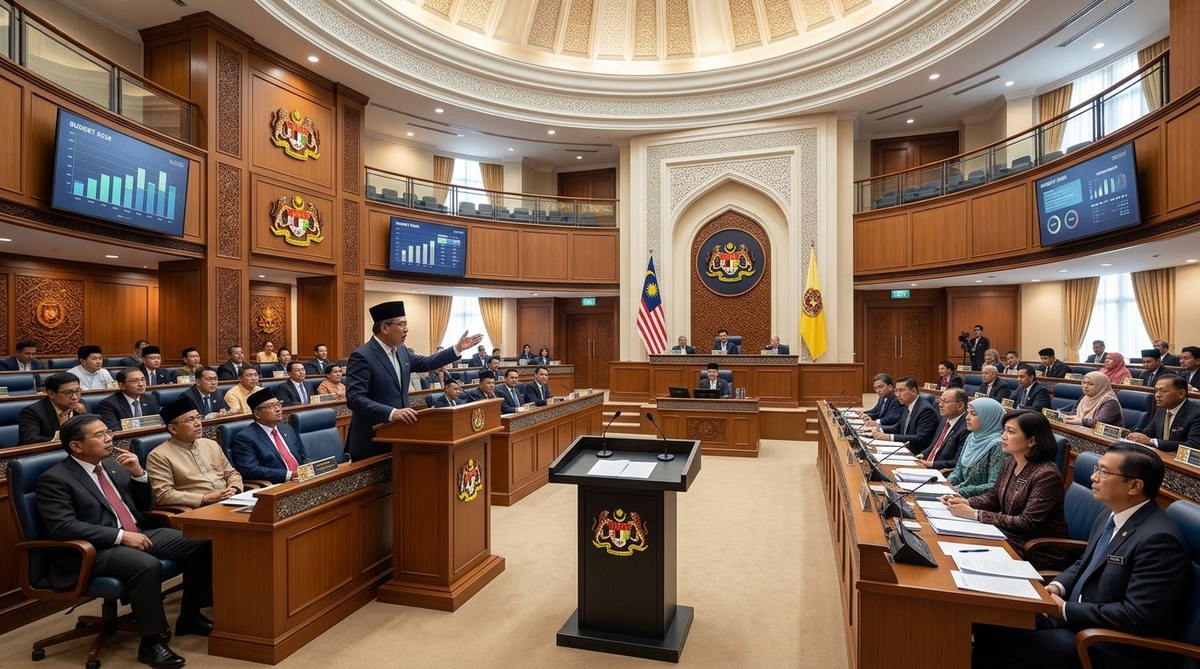
The parliamentary session in early 2026 will be the first test. Watch for these signs.
- Which parties propose amendments to weaken the disclosure thresholds.
- Whether the government sets up the oversight commission before the laws pass, as a sign of commitment.
- How the MACC handles any early test cases. A high-profile prosecution would send a strong signal.
If you want to dig deeper into how these changes interact with other reforms, our article on 3 major shifts in Malaysia’s counter-corruption policies under the current government offers more context.
The path forward is clear
Malaysia’s 2026 anti-corruption drive is not just about closing loopholes. It is about restoring faith in the democratic process. When voters believe that elections are bought and paid for, they stop participating. Turnout drops. Cynicism rises. The system becomes a playground for the powerful.
By targeting political funding, the government is trying to give the average Malaysian a reason to believe again. It is a long shot. But it is the most promising shot the country has taken in years.
Keep your eyes on Parliament. Ask questions. Hold your representatives accountable. The change will not come from Putrajaya alone. It will come from every Malaysian who decides that transparency is worth demanding.






Leave a Reply