
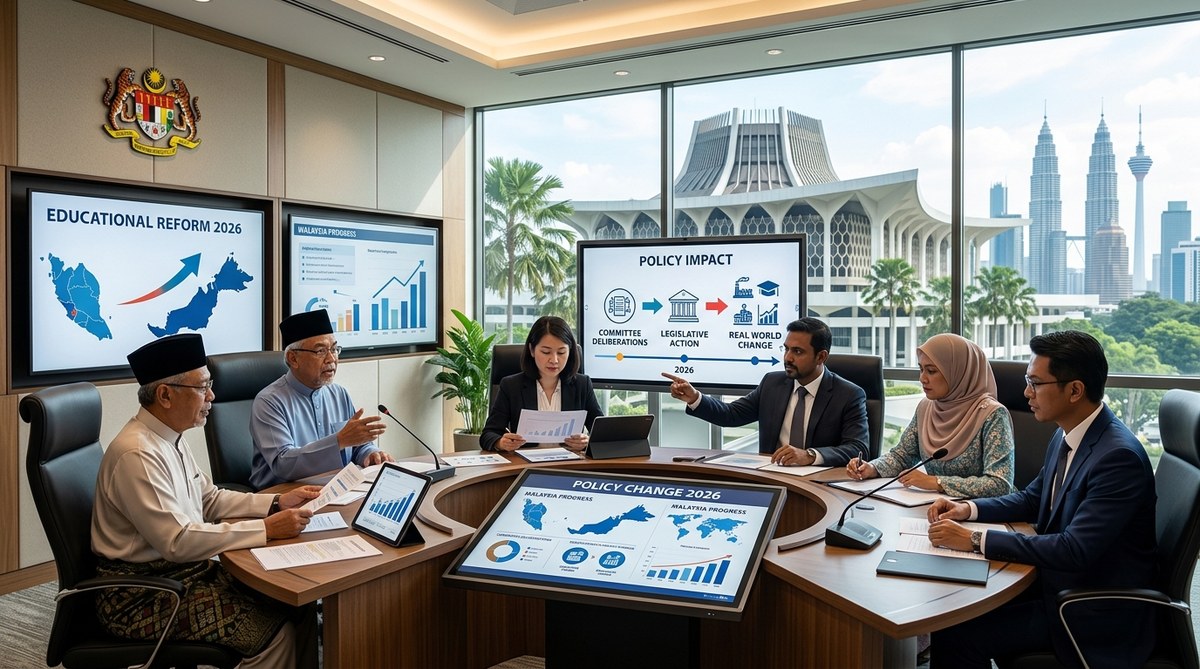
Parliamentary select committees in Malaysia have long been seen as procedural bodies, places where bills go to gather dust or where political grandstanding happens behind closed doors. That perception is changing fast in 2026. These committees are now central to how the country crafts legislation, holds the government accountable, and responds to public pressure. For policy analysts and governance professionals, understanding this shift is no longer optional. It is essential to grasp how these committees are turning political promises into tangible reforms.
Malaysian parliamentary select committees have evolved from rubber stamp bodies into serious policy drivers. In 2026, they are responsible for major reforms in areas like anti corruption, fiscal responsibility, and institutional separation of powers. Their effectiveness depends on bipartisan cooperation, clear mandates, and public engagement. This shift marks a maturing of Malaysian democracy.
The Quiet Revolution in Malaysia’s Parliament
For decades, Malaysia’s Parliament operated with a strong executive that often sidelined legislative scrutiny. Select committees existed, but they were rarely empowered to challenge the government of the day. The 2018 general election changed the political landscape, and the reforms that followed have taken root by 2026. Today, these committees are not just talking shops. They produce reports that lead to actual amendments, they summon ministers and senior civil servants for public hearings, and they give opposition MPs a structured platform to contribute.
The shift is partly due to a more fragmented political environment. No single coalition holds an absolute majority, so negotiation and cross party dialogue have become necessary. Select committees offer a space for that dialogue to happen away from the theatrical debates of the main chamber. They allow for detailed, evidence based discussions on complex issues.
How Select Committees Influence Policy in Practice
Understanding the Malaysia parliamentary select committees policy impact requires looking at their actual workflow. It is not abstract. It is a repeatable process that has become standard practice in 2026.
- Referral and Mandate Setting: The Dewan Rakyat or the Speaker refers a specific bill or policy issue to a select committee. The committee’s mandate is clearly defined in the referral motion. For example, the Special Select Committee on the Separation of the Powers of the Attorney General and the Public Prosecutor received a very specific mandate in early 2026.
- Evidence Gathering and Hearings: The committee calls for written submissions from the public, experts, and relevant stakeholders. It then holds public hearings. These are not secret sessions. They are streamed online, and transcripts are published. This transparency is a major change from the past.
- Deliberation and Drafting: Committee members, drawn from both government and opposition benches, debate the evidence. They propose amendments. The committee’s final report includes a draft of the amended bill or a set of policy recommendations.
- Report and Government Response: The report is tabled in Parliament. Crucially, the government is now expected to respond formally within a set timeframe, usually 60 days. If the government rejects a recommendation, it must explain why.
This process has led to tangible outcomes. The fiscal responsibility bill that passed in mid 2026 was heavily shaped by the Select Committee on Finance and Economy. The original version was considered weak. The committee’s amendments tightened debt limits and introduced mandatory parliamentary approval for large off budget projects.
What Makes a Select Committee Effective?
Not all committees are created equal. Some produce strong results, while others struggle. Based on the track record of the 15th Parliament, several factors determine success.
| Factor | Strong Committee | Weak Committee |
|---|---|---|
| Chairperson | Non partisan, respected, experienced | Partisan appointee with a clear agenda |
| Membership | Balanced mix of government and opposition | Dominated by one coalition |
| Mandate | Clear, specific, time bound | Vague, broad, open ended |
| Resources | Dedicated research staff and budget | Relies on ministry support only |
| Public Engagement | Open calls for submissions, live hearings | Closed sessions, limited transparency |
| Government Response | Formal, timely, substantive | Ignored or delayed |
The Select Committee on the Separation of Powers is a good example of a strong committee. It had a clear goal, a respected chair, and it actively sought input from the Malaysian Bar, academic experts, and civil society groups. The resulting bill was significantly improved.
The Role of Public Participation
One of the most encouraging developments in 2026 is the growing public engagement with select committees. Ordinary Malaysians, not just lobbyists and think tanks, are submitting their views. When the Select Committee on Climate Change called for public feedback on the proposed Carbon Pricing Bill, it received over 1,200 submissions from individuals, small businesses, and environmental groups.
This matters because it gives committees a mandate beyond party politics. When a committee can say “the public overwhelmingly supports this amendment,” it becomes harder for the government to ignore. It also helps build trust in a political system that many Malaysians view with skepticism.
“Select committees are the best tool we have for bringing citizen voices directly into the legislative process. They are not perfect, but they are far more accessible than the cabinet or the prime minister’s office.” — Dr. Faridah Zain, political analyst and former committee advisor.
Challenges That Remain in 2026
Despite the progress, select committees still face significant hurdles. The most persistent issue is the lack of binding power. A committee can recommend, but the government can still refuse. There is no mechanism to force compliance. This creates a gap between committee recommendations and actual implementation.
Another challenge is the workload. MPs sit on multiple committees, and the parliamentary calendar is crowded. Some committees meet only a few times before a bill is rushed through. The Select Committee on Health, for example, struggled to complete its review of the new Public Health Bill because of conflicting schedules.
There is also the problem of political interference. While rare in 2026, there have been cases where the government delayed referring a controversial bill to a committee, hoping to bypass scrutiny. The Speaker has generally resisted this, but the risk remains.
How to Track Committee Work in 2026
For governance professionals who want to stay informed, there are practical steps you can take.
- Monitor the official Parliament website for committee announcements and live streams.
- Subscribe to the mailing lists of major think tanks like the Institute for Democracy and Economic Affairs (IDEAS) and the Malaysian Institute of Economic Research (MIER). They often publish analyses of committee reports.
- Follow the social media accounts of committee chairs and members. Many now use Twitter and Instagram to announce hearings and share updates.
- Attend public hearings when possible. They are held in Parliament and are open to the public.
For a broader view of how these committees fit into the larger picture of political change, you can read more about Malaysia’s political stability in 2026 and how civil service reform is redefining governance.
The Future of Scrutiny in Malaysia
Select committees are no longer a footnote in Malaysian politics. They have become a central part of how policy is made and how the government is held accountable. For analysts and researchers, this means paying close attention to committee reports. They are often the first draft of future legislation.
The trend is clear. In 2026, a bill that goes through a rigorous select committee process is more likely to be well drafted, enjoy broader support, and survive legal challenges. A bill that bypasses this process is viewed with suspicion. This is a healthy development for Malaysian democracy.
The next step is to strengthen the system further. Giving committees the power to compel witnesses and to require the government to respond within a fixed period would close the current loopholes. There is also a growing call for a dedicated Parliamentary Budget Office to support the finance committee with independent analysis.
For now, the message for policy professionals is simple. If you want to understand where Malaysia is heading, stop looking only at the cabinet and the prime minister. Look at the select committees. That is where the real work is being done.








Leave a Reply