

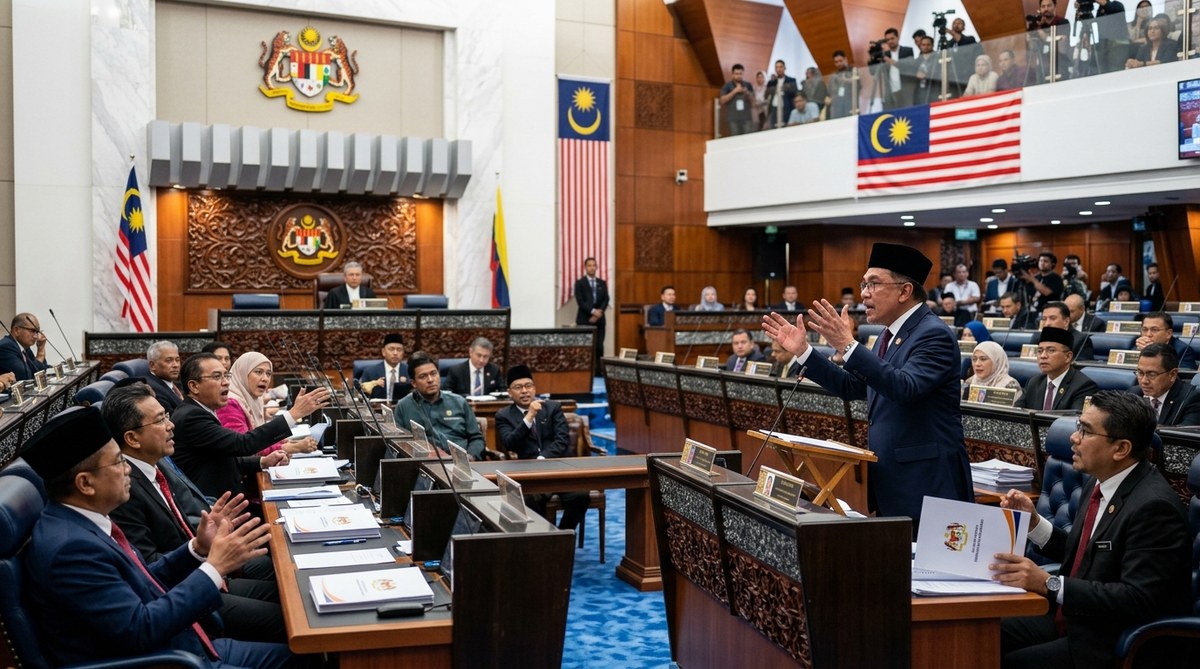
The Dewan Rakyat chamber has always had its quiet corners. But in 2026, those corners are making noise. Malaysian parliamentary backbenchers, once seen as loyal voting fodder for the government, are now shaping legislation in ways that would have seemed unlikely just a few years ago. From Budget 2026 debates to sudden policy U-turns, the men and women sitting behind the government front bench are no longer just nodding along. They are negotiating, pushing back, and sometimes even forcing the cabinet to reconsider.
Malaysian parliamentary backbenchers influence 2026 has grown because of a fragile coalition government, a more assertive civil society, and internal party reforms. Backbenchers now act as brokers between the executive and the grassroots. Understanding this shift is essential for anyone tracking where real political power lies in Malaysia today.
How a Fragile Coalition Changed the Game
Malaysia’s political landscape has been unstable since 2018. By 2026, the ruling coalition holds a razor-thin majority. Every vote matters. This reality gives backbenchers leverage they never had before. When the government needs to pass a bill, it cannot afford to lose even a handful of its own members.
In previous decades, a backbencher who voted against the party line risked disciplinary action or even expulsion. Today, the calculation is different. Party whips still exist, but they operate with more caution. A backbencher from Sabah or Sarawak, for example, can now demand better terms for their state in exchange for support on a federal bill.
This dynamic is not unique to Malaysia. But the speed at which it has developed here surprises many observers. The shift is visible in three main areas:
- Budget negotiations that include input from backbencher caucuses
- Private members’ bills that actually get debated on the floor
- Select committee assignments that carry real weight
The Three Levers of Backbencher Power
Backbenchers in 2026 use three primary tools to assert their influence. Each tool works differently, but together they create a system where the executive must negotiate.
1. The Budget Vote
The annual budget is the most important piece of legislation. In 2026, the government cannot take its own MPs for granted. Backbenchers now submit specific requests during the budget drafting stage. These requests often target local infrastructure projects, healthcare clinics, or school upgrades.
If a backbencher feels ignored, they can abstain or even vote against a specific clause. This is not a hypothetical risk. It happened during the committee stage of Budget 2026 when three government backbenchers withheld support for a proposed digital services tax until they received guarantees for rural internet funding.
2. Select Committee Membership
Select committees have grown more powerful since parliamentary reforms began in 2023. In 2026, committees on finance, human rights, and federal-state relations are particularly influential. Backbenchers chair several of these committees.
Committee reports now carry weight. When a committee releases a critical report on a proposed law, the government often amends the bill before the second reading. This process gives backbenchers a formal channel to shape policy.
3. The Media and Public Pressure
Social media and local news outlets give backbenchers a platform. A well-timed statement on Twitter or a quote in a Malay-language daily can sway public opinion. Backbenchers use this to build pressure on ministers. In 2026, several backbenchers have built strong personal brands that cross party lines.
| Lever | How It Works | Example from 2026 |
|---|---|---|
| Budget vote | Threaten to withhold support | Three MPs blocked a digital tax clause |
| Select committee | Publish critical reports | Finance committee forced changes to a subsidy bill |
| Media pressure | Public statements and interviews | Backbencher pushed for flood relief funding via social media |
Why Party Loyalty No Longer Guarantees Silence
Party loyalty is still important. But it is no longer absolute. Several factors explain this change.
First, the coalition government includes multiple parties with different priorities. An MP from PKR may disagree with an MP from DAP on economic policy. When these disagreements happen inside the government bloc, backbenchers feel freer to speak up.
Second, voters expect their MP to deliver local results. In the past, voters cared mostly about party affiliation. Now, they ask what their MP has done for the district. This pressure forces backbenchers to push for tangible outcomes.
Third, internal party elections are more competitive. Younger MPs challenge older incumbents. To build a record, a backbencher needs visible achievements. Voting with the government on every issue does not build a reputation. Taking a stand does.
A Practical Example: The Pahang Highway Debate
In early 2026, a proposed highway project in Pahang sparked debate. The project was part of the national budget. Several government backbenchers from Pahang opposed it. They argued the environmental cost was too high and the route would displace villages.
These MPs did not just complain privately. They spoke in the Dewan Rakyat. They held meetings with the Ministry of Works. They coordinated with local NGOs. In the end, the government agreed to a revised alignment that avoided the most sensitive areas.
This outcome would have been unlikely five years ago. Back then, the party line would have prevailed. The highway would have been built as planned. Today, backbenchers have the space to advocate for their constituents.
How Backbenchers Build Influence in 2026
If you are a political analyst or a policy watcher, you might wonder how this influence is built. Here is a simple numbered list of the steps backbenchers take:
- Build a local base that is stronger than party loyalty. This means regular town halls, social media engagement, and visible projects.
- Join or form a cross-party caucus. Caucuses on issues like climate change, education, or cost of living allow backbenchers to pool influence.
- Use select committees to build expertise. A backbencher who knows the details of a policy can challenge ministers effectively.
- Develop relationships with the media. A friendly journalist who covers Parliament can amplify a backbencher’s message.
- Negotiate quietly before public votes. Most influence happens behind closed doors. A private meeting with the minister is more effective than a dramatic speech.
“The days when a backbencher was just a rubber stamp are over. Now, the smart ones build a reputation for independence while staying inside the coalition. That is where real power lies.” — Senior political analyst at a Kuala Lumpur think tank
Challenges Backbenchers Still Face
The new influence is not without limits. Backbenchers still operate within a system that favors the executive. The government controls the parliamentary calendar. It decides which bills get debated and when.
Party whips still have tools. They can withhold committee assignments. They can block access to government resources. In extreme cases, they can push for expulsion from the party. But these tools are blunter than they used to be. Using them too aggressively risks splitting the coalition.
Another challenge is the lack of support staff. Backbenchers in Malaysia have small offices compared to their counterparts in countries like the United Kingdom or Australia. They rely on personal assistants and sometimes party researchers. This limits how much detailed policy work they can do.
What This Means for the Next General Election
The rise of backbencher influence has implications for GE16. Voters now see their local MP as a potential check on executive power. A backbencher who has fought for local issues may earn personal loyalty that survives a swing against the party.
At the same time, parties may find it harder to enforce discipline. Candidates who know they can win on their own brand may be less willing to follow the party line after the election. This could lead to more coalition instability.
For a deeper look at how these dynamics affect the broader system, read our analysis on how Malaysia’s political landscape will evolve in 2026. You can also check our piece on 3 key parliamentary reforms that could change Malaysian governance in 2026.
The Quiet Revolution in Parliament
The shift in backbencher influence is not dramatic. There is no single event that marks the change. Instead, it is a series of small moments. A clause amended here. A project delayed there. A minister forced to explain a decision.
For those tracking Malaysian politics, this trend is worth watching. It suggests a maturing of the parliamentary system. Backbenchers are becoming representatives in the full sense of the word, not just party soldiers. And that is a healthy sign for any democracy.
If you are a journalist or a policy researcher, pay attention to the backbenchers who use their position wisely. They are the ones who will shape Malaysia’s governance in the years ahead. And if you are a voter, take note of what your MP does when the cameras are off. That is where the real work happens.








Leave a Reply